


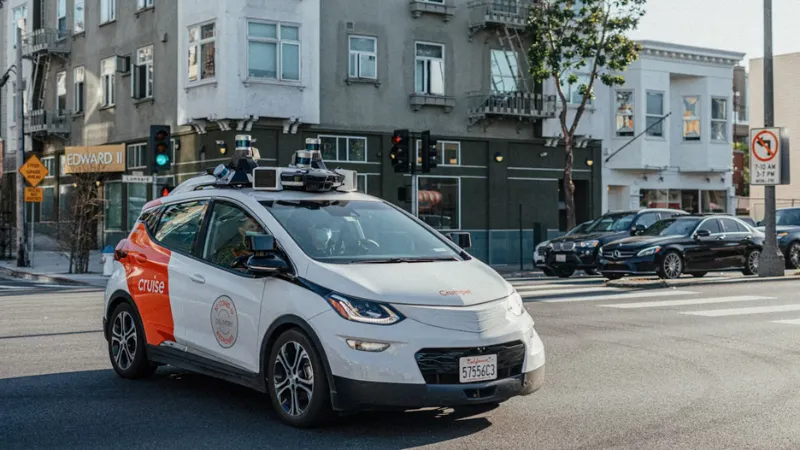
Lima, Peru, isn’t the place most people imagine when they think about the future of autonomous driving. The traffic is unpredictable, and lane discipline is more of a suggestion. A mototaxi, a vendor car, or a wandering dog can disrupt the flow at any moment.
But that’s exactly why a Peruvian startup named Artificio chose it as the foundation for something bold. They’re building a new way of teaching self-driving cars how to understand the real world.
This approach isn’t just relevant for Peru. Many other countries are dealing with their own struggles in autonomous driving, and we’ll get into those in a bit. Together, they reveal why the industry may need a completely new playbook.
Why “Real-World Chaos” Might Be the Missing Ingredient
Artificio, founded by researcher Arturo Deza, starts with a simple observation. Most autonomous systems are trained in places that look perfect on paper. Clean road markings, predictable behavior, consistent signage, and orderly traffic patterns shape most of their learning. That works well in simulation. It even works in suburban neighborhoods. But the world doesn’t drive like a computer expects.
So the team flipped the strategy. Instead of collecting polished, high-quality data from flawless environments, they strapped dash cams and GoPros onto cars across Lima, Cusco, and Cajamarca.
Their footage captures everything that tends to confuse autonomous vehicles. Non-standard vehicles, sudden lane changes, broken signage, chaotic intersections, and unpredictable behaviors all show up in the data. The kind of stuff machines usually fail at.
Their goal isn’t to fix the traffic but to build models that survive it. And that’s where their idea gets interesting.
Artificio is designing what it calls NeuroAI foundation models, systems that classify objects by finding the closest match from previously learned examples. It sounds deceptively simple, but it reduces the need for massive training datasets. Instead of brute-forcing billions of labeled images, the model tries to reason by similarity, almost like human intuition.
If a startup can build an AV model that thrives in Lima, they argue, it’s already ahead. It should handle almost anything the world throws at it.
The Limits of “Perfect-World” AV Engineering
When we think about autonomous vehicles, the United States usually comes to mind. The big players love showcasing how well their fleets perform on clean highways and neatly mapped suburbs. Those settings make the tech look polished and reliable. But the moment real-life chaos enters the frame, even the most advanced AVs can lose their footing.
Take the recent incident in Atlanta, Georgia. A Waymo robotaxi was caught on video maneuvering around a school bus with its red lights flashing. Regulators stepped in after seeing the vehicle cross in front of the bus from the right side. Then, it swung left around the front before driving off. Waymo says the bus was partially blocking the driveway the robotaxi was exiting. They claim the system never saw the flashing lights or the extended stop sign.
A human driver would immediately understand how risky that moment was. For an AV, missing that cue can end in disaster. One wrong move around a school bus can lead to injuries, property damage, or worse.
Though in this case, nothing happened. Still, situations like this push people toward a car accident lawyer in Atlanta. AV cases carry extra layers of complexity, so people want someone who actually knows how to navigate them.
A lawyer can access the right records, review data, and determine whether the fault lies with the human, the software, or a mix. They can also help build a case if there’s evidence of human negligence, poor maintenance, or flawed decision-making logic. This keeps the victim from fighting a tech maze alone, as noted by Atlanta Personal Injury Law Firm.
Why People React More Harshly to AV Failures
There’s another psychological angle that matters here. Research from Harvard Business School shows that people judge autonomous vehicles more harshly than human drivers, even when the mistakes are comparable. When a human driver messes up, we think accidents happen. When an AV messes up, we imagine a perfect human who should have done better.
This gap widens because public trust is already sliding. Forbes notes that confidence in AVs has been declining over recent years. The primary concerns are about hacking, data privacy, and confusion about how these systems make decisions. So any failure, even an unlikely one, gets amplified far beyond the technical facts.
The Atlanta incident shows how quickly the narrative can spiral. The moment the story surfaced, people questioned the entire ecosystem, not the isolated scenario.
For startups like Artificio, this creates an unexpected strategic opportunity. Their promise is to shrink edge-case errors, the very moments where credibility collapses.
If an autonomous vehicle can identify an ice-cream cart rolling into the street in Lima, that’s a real leap. Add the ability to recognize a weaving three-wheeled mototaxi, and the odds of misreading something routine like a school-bus stop arm drop sharply.
Artificio isn’t just solving engineering puzzles. They’re working on human trust, which may be the harder problem.
What Makes Artificio’s Approach Different
A few things stand out about how Artificio thinks:
- Start with the hardest data: Instead of teaching AVs how traffic should look, they teach AVs how traffic actually looks in the wild.
- Build models that generalize, not memorize: Using similarity-based classification means the system can reason through novel objects, not just familiar ones.
- Create a benchmarking platform: They’re building a portal where other engineers can upload their models and test them against Peruvian real-world scenarios. Think of it as a stress-test lab for AVs.
- Aim for global relevance: Their view is simple: if an AV can function in Lima, it can function in Los Angeles, Berlin, or Seoul.
And that’s why their work feels important. They’re creating a bottom-up challenge to the industry’s assumptions.
FAQs
Are there any fully autonomous cars?
No consumer car on the market can truly drive itself in every scenario without human backup. Some companies offer limited hands-free systems on mapped highways or restricted zones, but they still require human oversight. Full autonomy remains in testing, research fleets, and controlled pilot programs.
What is the biggest challenge for autonomous vehicles?
The toughest problem isn’t perfecting sensors or navigation. It’s creating systems that can read unpredictable human behavior, weather changes, improvised road layouts, and culturally unique driving styles. Until AVs can adapt fast and accurately in messy, unscripted environments, safety and public trust will remain the real barriers.
Which country has driverless cars?
Several countries run limited driverless services. The most advanced deployments are seen in the United States, China, Japan, Singapore, and the United Arab Emirates. These regions have pilot zones, robo-taxis, or controlled commercial routes, though availability is still narrow and heavily regulated rather than universal.
Overall, Artificio’s work shows a shift happening in autonomous-driving research. Instead of sending AVs into curated environments and calling it progress, we need a harder standard. The future may belong to whoever can teach machines to survive the shocks, surprises, and quirks of real streets.
From Lima’s relentless unpredictability to Atlanta’s wake-up calls, the message is the same. Autonomous vehicles won’t win trust by being perfect in perfect conditions. They’ll win by proving they can handle what humans deal with every day.
