


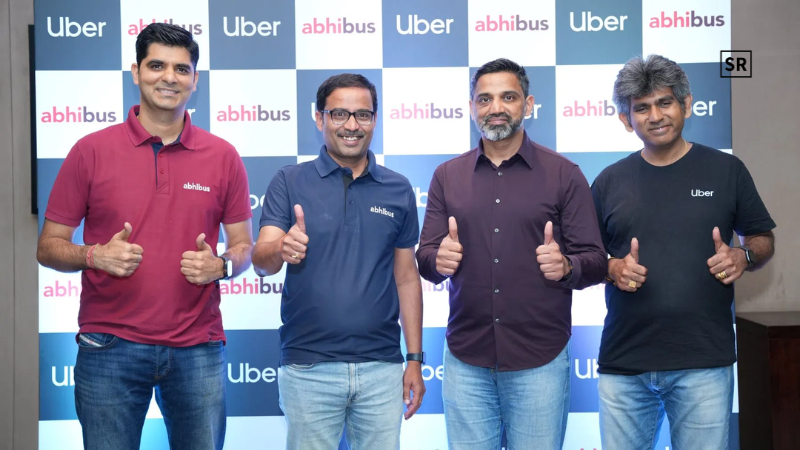
Ride-hailing company Uber has partnered with AbhiBus, the bus platform owned by ixigo, to start offering intercity bus ticket booking in India. This is the first time Uber has introduced bus ticket services anywhere in the world.
With this new service, Uber is entering the bus travel market for the first time. The company is aiming to grow in India’s large mobility market, which is worth about $13 billion. Out of this, around $6–$8 billion comes from bus services, while the rest comes from cab services for city and intercity travel.
The new bus booking feature has been available across India since March 6, allowing users to book intercity bus tickets directly through the Uber platform.
Praveen Neppalli Naga, chief technology officer, Uber said, “India is one of Uber’s most important innovation hubs globally. Teams here are building technologies that power Uber’s next phase of growth worldwide.’’
Mr. Naga added that the launch of intercity bus ticketing shows how products developed in India are influencing Uber’s global strategy while giving riders more options.
Uber currently has 2,500 engineers in India working on its technologies, products, and platforms.
Prabhjeet Singh, president, Uber India and South Asia said, “intercity travel in India is at an inflexion point. This creates a massive opportunity to reimagine how people plan and experience intercity journeys, and we see strong momentum for digital.’’
Mr. Singh said that with improved highways and road connectivity across the country, long-distance road travel has become more accessible than ever before.
He further commented: “With the launch of bus ticketing services, Uber in India has become the most diverse in terms of options. Indian market is also incredibly diverse, although a significant portion of the market is fragmented and some 5% is currently organised.’’
