

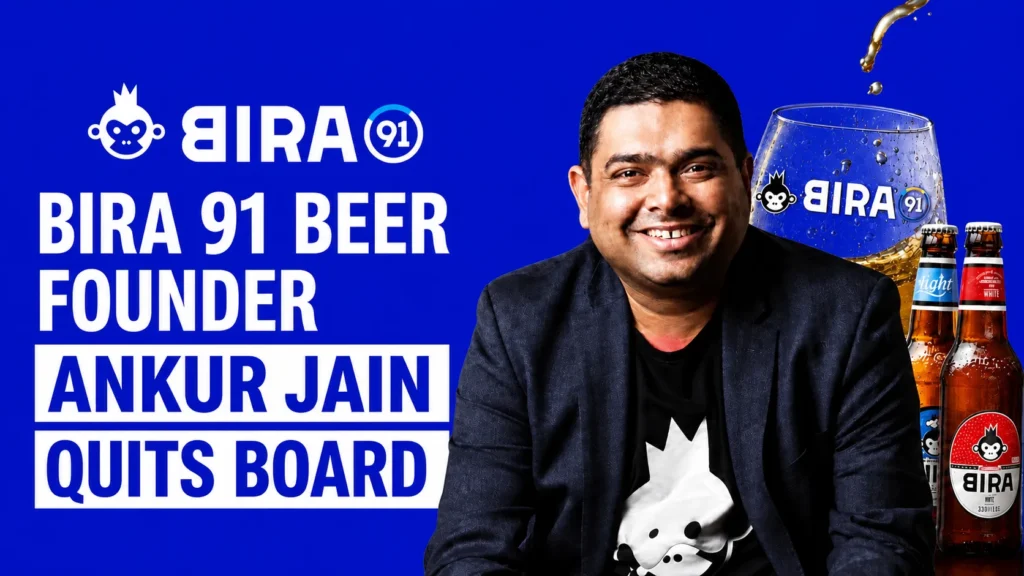
Ankur Jain, the founder of Bira 91, has stepped down from the board of B9 Beverages after reaching a settlement with the company's lenders and investors.
SUMMARY
- Ankur Jain has stepped down from the B9 Beverages board.
- The move follows a settlement with the company's lenders and investors.
- B9 Beverages reported a Rs 748.8 crore net loss in FY24.
 Follow us
 Follow us
The agreement brings an end to a dispute that lasted for nearly two years over the company's financial and governance problems.
As part of the settlement, Ankur Jain has given up the promoter family's executive control of the company.
In return, Jain received relief from certain personal liabilities linked to the company's loans and borrowings.
RECOMMENDED FOR YOU


The settlement is an important step in B9 Beverages' restructuring plan as the company works to stabilise its business after facing financial difficulties.
The leadership change came after continued pressure from lenders and shareholders, who wanted major management changes due to the company's losses, cash flow problems, and operational challenges.
Despite stepping away from the company, Jain expressed gratitude towards employees, investors, and business partners who helped build the brand over the past decade.
"I am thankful to everyone who has allowed us to create the Bira 91 brand, team members, investors, business partners," Jain said.
He added:"We ran into rough weather in the last two years. However, with this resolution, the business will enter a new phase of growth, a phase in which I will be cheering for the company and the brand from the sidelines."
For FY24, B9 Beverages reported a net loss of Rs 748.8 crore while its operating revenue was Rs 638.5 crore, showing the company's serious financial problems. The company has not yet announced its financial results for FY25 and FY26.
In recent years, B9 Beverages has also faced reports of delayed salary payments and legal notices from creditors, highlighting ongoing cash flow issues. Because of these challenges, institutional investors called for better corporate governance and changes in the company's leadership.
Recommended Stories for You

Yan li Jul 1, 2025

Yan li Mar 16, 2026


Yan li Mar 24, 2026
Trending Stories

Lumana has raised $40 million in Series A funding.
Remedio Raises $65M in First Funding Round, Hits $300M Valuation

[FUNDING NEWS] Israel-Based BAIBYS has Secured $4.5 Million in Series A Round Funding

Israeli AI Startup Onebeat Secures $15M in Funding

[FUNDING NEWS] Israel-Based Zest Security has Secured $5 Million in Seed Round Funding

Israel-Based Lian Group has Acquired with Scientis

From Fans to a Billion-Dollar Media Empire: The Journey of Minute Media’s Founders

Israel-based AutonomyAI Secures $4 Million in Seed Funding