

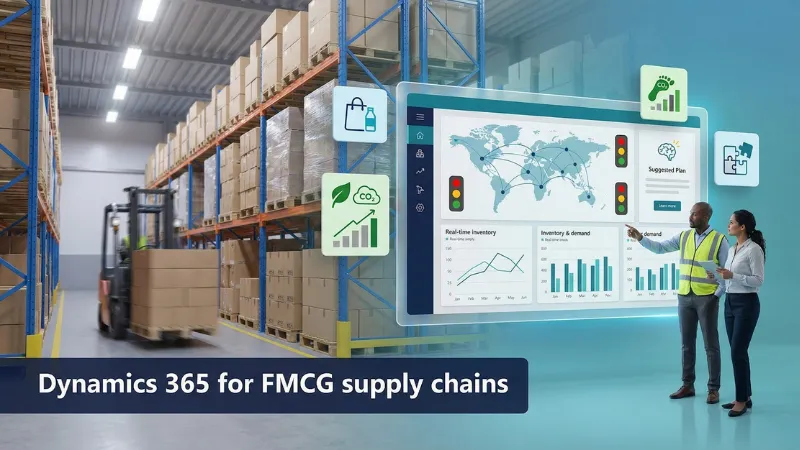
Fast-moving consumer-goods distributors live and die by speed. When stock lands in the wrong warehouse, promo margins vanish. You need a single, real-time view of inventory, demand, and cash that every manager can trust.
Dynamics 365 can provide that visibility, but only if experts configure it. In 2023, retailers and distributors that hired specialized ERP consultants achieved an 85 percent implementation success rate—far higher than do-it-yourself projects. We evaluated dozens of Microsoft partners, scored them against transparent criteria, and ranked the seven firms that reliably turn distribution complexity into competitive edge.
Dynamics 365 in FMCG distribution: fresh capabilities you can use today
Supply chains never stand still, and neither does Dynamics 365. Over the past 18 months, Microsoft has rolled out features tailored to perishables, weekly promotions, and razor-thin margins.
First, artificial intelligence moved from theory to keyboard. New Copilot tools inside Dynamics 365 Supply Chain Management analyse real-time demand signals and draft replenishment plans in plain language you can refine before approving. Early adopters report lower forecast error and less time lost in spreadsheets (Microsoft blog, October 2023).
Next came Supply Chain Center, a command hub that combines inventory, logistics, and weather data in one live dashboard. Picture traffic-light alerts for every SKU and lane, plus suggested actions you can approve with a click. For distributors juggling dozens of 3PL partners, that single view means fewer frantic calls and more proactive moves.
Industry clouds continue to mature. Cloud for Retail now bundles store, e-commerce, and wholesale data models, while a Food & Beverage template manages batch tracking and compliance. These blueprints trim weeks of setup, so partners can focus on the 20 percent of processes that make your business unique.
Sustainability is no longer a side quest. Built-in carbon tracking helps measure transport emissions at the shipment level, which is helpful when big-box customers demand ESG scorecards with every purchase order.
Finally, partners are publishing new accelerators on AppSource faster than ever. Think pre-built EDI packs, last-mile delivery connectors, and shelf-life algorithms. During interviews, ask which of these add-ons a partner has deployed in the past year; their answer reveals how current they are.
Bottom line: Dynamics 365 now delivers the data, insight, and industry depth that FMCG distributors were asking for five years ago. The right partner turns those capabilities into daily gains on your warehouse floor and balance sheet.
How to spot a great Dynamics 365 partner for FMCG distribution
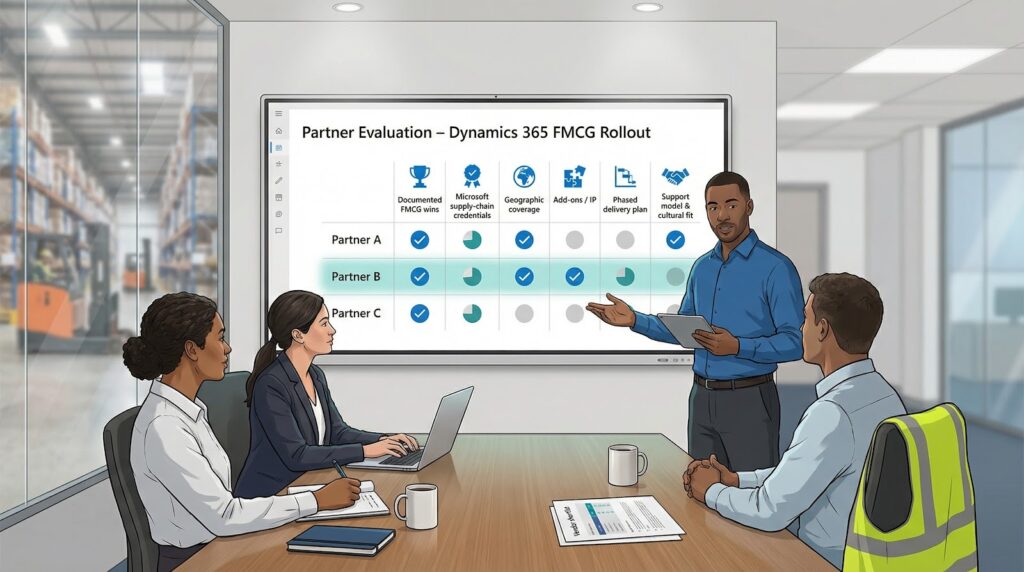
Choosing a partner is like picking a co-pilot on a night flight: experience, communication, and trust keep you aloft when the weather turns ugly. Here are the qualities that separate true FMCG experts from general-purpose implementers.
First, insist on industry proof. A firm that has mapped lot-controlled ingredients, managed trade-promotion rebates, and integrated with 3PL networks will solve your challenges faster than a newcomer. Ask for case studies that cite on-time delivery rates or inventory reductions; numbers reveal depth.
Second, verify Microsoft credentials. Look for the Business Applications Solutions Partner badge, plus advanced specializations in Supply Chain Management or AI. These designations prove the consultants passed rigorous exams and the company maintained customer-satisfaction scores above Microsoft’s bar.
Geography matters too. If your network spans continents, a partner with follow-the-sun support prevents idle trucks overnight. Regional specialists shine for mid-market distributors that value onsite workshops and one time zone. Match scale to scale.
Supply-chain IP is the next filter. Pre-built EDI packs, warehouse-management extensions, or demand-planning dashboards shorten projects and lower risk. Ask for a demo running on vanilla test data. If it feels 80 percent tuned for your world already, you have a head start.
Methodology often hides in the fine print, yet it drives the calendar. A good partner outlines phased delivery, bakes user training into every sprint, and assigns change-management leads who speak operations, not just IT. Your warehouse supervisors should know these names before the first conference-room pilot.
Finally, weigh culture and cost together. Enterprise integrators bring depth, redundancy, and higher commercials. Boutique firms offer senior access and agility, though they can stretch when surprises hit. The right fit balances bench strength, price, and a working style your team respects.
Keep these checkpoints handy during vendor calls:
- Documented FMCG wins
- Current Microsoft supply-chain credentials
- Coverage where you operate
- Relevant add-ons in production use
- Transparent, phased delivery plan
- Support model and cultural fit
If a contender scores well across that list, you are on the path to a smooth Dynamics 365 take-off.
How we built the list and why you can trust it
We started with a simple search. After scanning the first 20 Google results for phrases like “Dynamics 365 partners FMCG distribution” and “best D365 supply-chain consultants,” we found that many articles were thin, vendor-sponsored, or outdated.
Next, we built a longlist of 42 Microsoft partners that publicly claim expertise in wholesale or consumer-goods distribution. Each firm was scored against a weighted rubric:
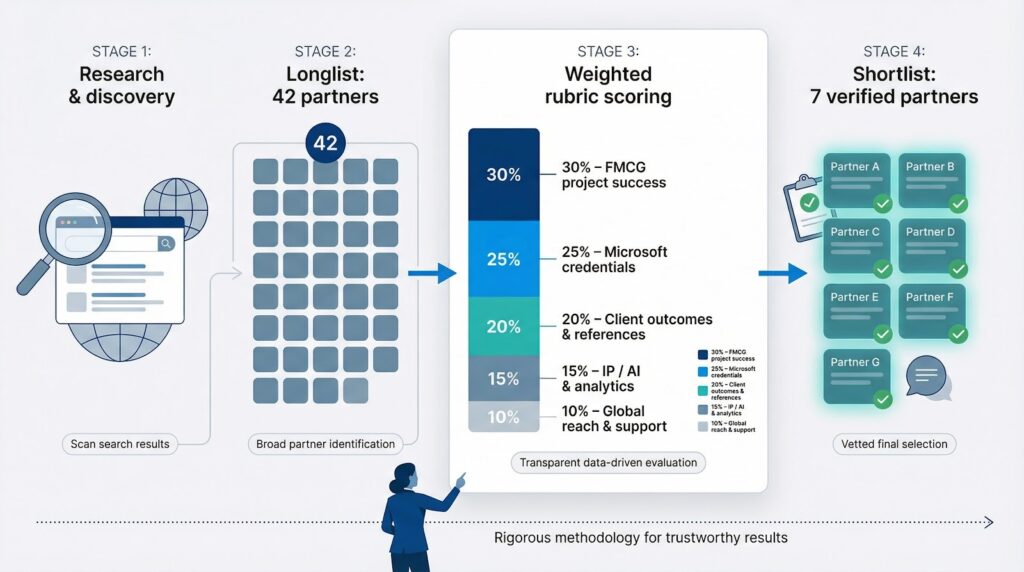
- 30 percent for demonstrable FMCG project success
- 25 percent for Microsoft credentials, such as Solutions Partner status, Inner Circle membership, or Partner-of-the-Year awards
- 20 percent for client outcomes and references
- 15 percent for proprietary IP or use of AI and analytics
- 10 percent for global reach and post-go-live support
Only seven firms cleared the bar on every factor. We interviewed each finalist or reviewed case-study evidence to confirm results, not just marketing claims. No partner paid for placement, and we disclose our client relationship with MCA Connect, supported by their record and Microsoft recognition.
The result is a ranked list grounded in transparent criteria and current data, so you can shortlist with confidence.
1. MCA Connect: distribution-first, results-driven
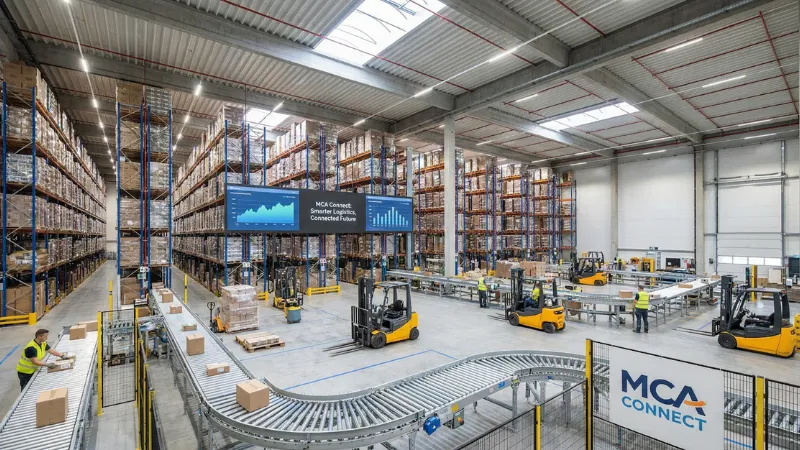
MCA Connect distribution ERP and Inspire Platform website screenshot
MCA Connect lives and breathes the supply chain. Its distribution ERP solutions, such as the AI-enabled Inspire Platform, deliver 99.99% bin-level inventory accuracy and unified dashboards that connect inbound, outbound, labor, and transportation metrics. The firm’s consultants come from shop floors, warehouses, and demand-planning war rooms, so talks start with back-order pain, not object models. That empathy shows in project stats: Dynamics 365 rollouts hit go-live without last-minute data scrambles, and customers report faster pick-pack cycles within weeks.
The company’s own IP gives you a head start. Fixed-Interval Scheduling smooths production for mixed-mode plants, while pre-built Power BI dashboards surface margin by SKU in near real time. Because the code is already field-tested, you spend the budget on tweaks that lift revenue, not on rebuilding basics.
Recognition backs the claims. MCA Connect has held Microsoft’s Inner Circle for Business Applications year after year, a spot reserved for roughly the top one percent of partners worldwide. That badge reflects customer satisfaction scores, not marketing spend, and signals a high bar for project success.
The team is headquartered in the United States and operates in more than 20 countries, coordinating hand-offs between local warehouse teams and central IT like seasoned air-traffic controllers. After go-live, a dedicated managed-services group keeps your environment patched, optimized, and ready for the next promo spike.
Ideal fit? Mid-to-large FMCG distributors that want deep distribution DNA without the red tape of a giant systems integrator. If you need a partner who talks turns, trade spend, and truckload reality from day one, MCA Connect deserves the first call.
2. HSO: global scale with an AI edge
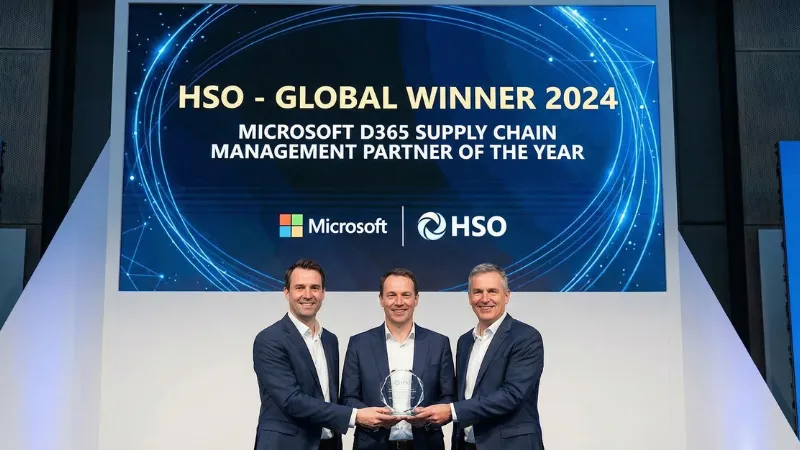
HSO Dynamics 365 Supply Chain Partner of the Year news screenshot
HSO blends enterprise muscle with a knack for applied AI. The firm operates across North America, Europe, and Asia, yet projects still feel personal thanks to industry-aligned pods that speak your language, whether that is retail promotions, food safety, or route-to-market complexity.
Microsoft noticed. In 2024 the company named HSO the worldwide Dynamics 365 Supply Chain Management Partner of the Year, applauding the team’s use of Copilot and predictive analytics to cut lead times for distributors. Customers report multi-country warehouses going live without disrupting daily shipments, driving lower stock-out rates, and smoother month-ends.
HSO’s advantage is a library of AI accelerators that layer on Dynamics 365. Demand-sensing models auto-adjust forecasts after a viral TikTok trend, while algorithms flag slow-moving lots before expiry. Because these tools arrive pre-configured, value lands in quarters, not years.
Add 24×7 support centers and a deep bench of certified architects, and you have a partner built for large FMCG distributors that want global consistency plus local agility. If your roadmap includes AI-driven planning across several regions, HSO is a strong fit.
3. RSM: enterprise horsepower with 3PL instincts
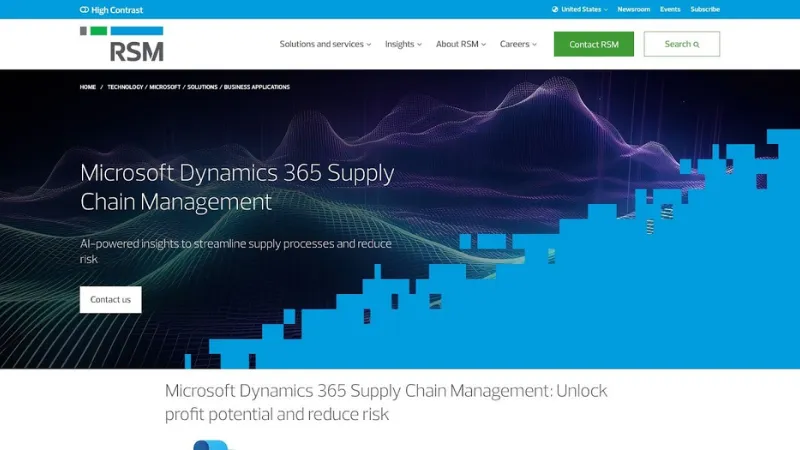
RSM Dynamics 365 Supply Chain Management services website screenshot
RSM sits at the crossroads of big-firm rigor and hands-on distribution know-how. The consultancy’s network spans 120 countries, yet project teams stay tight and accountable, a mix large FMCG groups value when rolling out Dynamics 365 to multiple legal entities.
Logistics integration is the sweet spot. An AppSource accelerator connects Dynamics 365 to third-party warehouse systems in days, not months, automating ASNs, lot data, and freight charges in one pass. That plumbing keeps finance, supply chain, and 3PL partners working from the same script when demand spikes.
Clients also tap RSM’s bench in tax, audit, and analytics, so rebate programs and landed-cost rules flow straight into the ERP design. If your distribution model leans on outsourced warehouses or cross-border complexity, RSM delivers the muscle to orchestrate it without missing month-end close.
4. Sunrise Technologies: consumer-goods clarity out of the box
Sunrise built its reputation in fashion and apparel, where seasons flip overnight and SKU counts explode. Those strengths carry over to fast-moving consumer goods. The Sunrise 365 suite bolts onto Dynamics 365, adding allocation, merchandising, and omnichannel inventory tools that feel purpose built for distributors chasing both wholesale and direct-to-consumer revenue.
Implementation speed is the draw. Because Sunrise 365 embeds best-practice workflows, project teams spend discovery sessions refining edge cases rather than reinventing pick-pack-ship basics. One outdoor-gear brand went live across wholesale and e-commerce channels in under nine months, a timeline that impresses seasoned program managers.
Omnichannel insight is another plus. Sunrise links Dynamics 365 Commerce, Shopify, and marketplaces so stock positions sync in minutes. The result is fewer canceled orders, happier retailers, and a P&L free from emergency airfreight.
If your catalogue changes often and you juggle wholesale, retail, and online orders, Sunrise brings a ready-made toolkit and focused expertise to keep every channel stocked without ballooning inventory.
5. Western Computer: warehouse pragmatists for the mid-market
Western Computer has spent three decades fine-tuning Microsoft ERP for wholesale distribution. That depth shows in the questions they ask on day one: slotting logic, carrier cut-offs, and rebate tracing. The team zeroes in on warehouse flow because speed at the dock door delivers the quickest payback.
Their 365WineTrade product proves the point. Built for wine and spirits, it handles lot tracking, compliance, and multi-state tax rules—complexities any food or beverage distributor will recognise. The same group also offers an integration pack for popular parcel and LTL carriers, shaving weeks off label-printing and rate-shopping setup.
Western keeps projects small and focused. Mid-market distributors often go live in six to nine months by phasing modules and leaning on the firm’s template library. After launch, the support desk resolves most issues within one business day, a cadence smaller IT teams appreciate.
Choose Western Computer when you want deep warehouse expertise, quick wins, and a partner whose size matches yours. They are pragmatic, candid, and focused on moving cartons, not writing endless slide decks.
6. Cegeka: AI-driven supply chain vision from Europe
Cegeka hit the spotlight when Microsoft named the Belgian firm the 2025 Dynamics 365 Supply Chain Partner of the Year, praising its blend of Copilot AI and resilient-planning blueprints. That award reflects projects where forecast error dropped by double digits after Cegeka layered machine-learning models on Dynamics 365 demand planning.
The company’s roots in food processing, chemicals, and retail distribution mean consultants speak allergens, batch genealogy, and VAT rules without a translator. After acquiring CTG, Cegeka now fields teams in North America, giving transatlantic FMCG groups one partner for both EU and US rollouts.
New capability shows up in practical touches. A shelf-life algorithm flags at-risk lots and suggests discount windows, while a sustainability dashboard traces lane-level carbon for retailer scorecards. These accelerators ship with the project rather than as afterthoughts.
Choose Cegeka if you want an AI-focused partner that thrives on complex regulations and is eager to prove its value on a global stage.
7. Folio3: e-commerce connector for fast digital pivots
Folio3 is the lean option on our list. The boutique partner excels at linking Dynamics 365 with Shopify, Magento, Amazon, and other marketplace portals, giving FMCG distributors one inventory view across B2B and D2C channels.
The playbook is simple. A pre-built connector syncs product, price, and order data every few minutes. Warehouse teams fulfil straight from the ERP, while customer-service reps track shipment status without switching screens. One health-supplement distributor cut manual entry by 90 percent after go-live and reassigned staff to revenue tasks.
Because Folio3 keeps core teams small, decision paths stay short. Scope changes get approved in hours instead of steering-committee cycles. Budgets follow suit: projects often land under $500,000, which appeals to emerging brands that need enterprise controls without enterprise invoices.
If your growth plan relies on online sales and marketplace expansion, Folio3 provides the wiring that turns web clicks into cartons out the door.
Compare your options at a glance
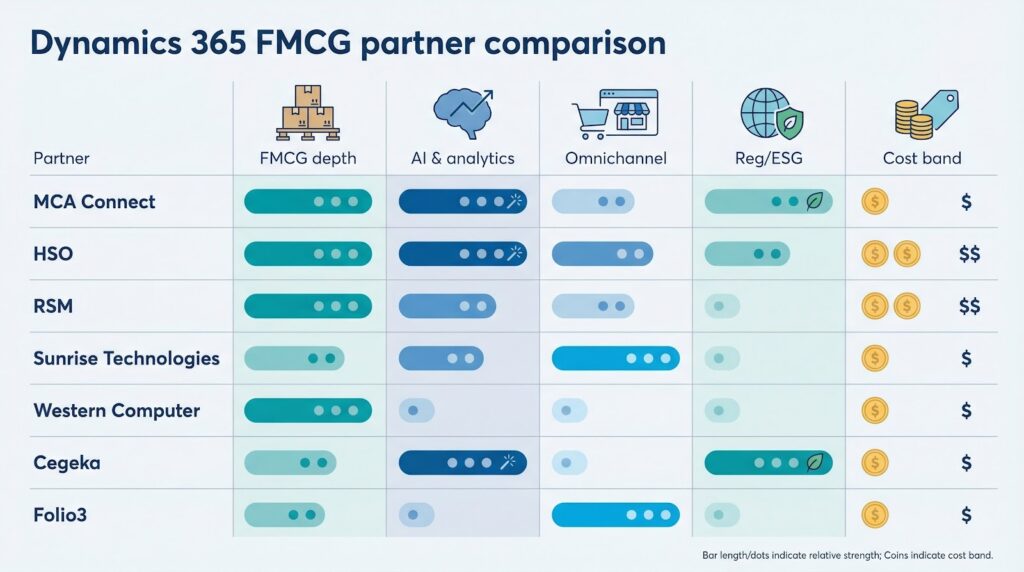
You have seven solid contenders, but their strengths differ. The table below highlights the factors MVP teams ask about first: industry proof, special tooling, and ballpark budget. Scan it, circle the rows that match your reality, and you will know which discovery calls to schedule next.
| Partner | FMCG credentials | Core Dynamics 365 modules | Proprietary add-ons | Stand-out benefit | Typical project cost |
| MCA Connect | 100+ distribution projects; Inner Circle streak | Finance, Supply Chain, Power BI | Fixed-Interval Scheduling, container-tracking dashboards | Distribution DNA with global reach | $ |
| HSO | 2024 Supply Chain Partner of the Year | Finance, Supply Chain, Sales, Commerce | AI demand sensing, Copilot playbooks | Enterprise scale plus AI accelerators | $ |
| RSM | 3PL and multi-entity rollouts for global wholesalers | Finance, Supply Chain, HR | WMS and 3PL integration accelerator | Big-firm rigor, logistics focus | $ |
| Sunrise Technologies | Apparel and CPG distributor wins | Supply Chain, Commerce | Sunrise 365® Supply Chain and Retail | Omnichannel ready on day one | $ |
| Western Computer | 30-year warehouse track record | Finance, Supply Chain, Business Central | 365WineTrade, shipping packs | Mid-market speed and pragmatism | $ |
| Cegeka | 2025 Supply Chain Partner of the Year | Finance, Supply Chain, Manufacturing | Shelf-life AI, carbon dashboards | EU compliance plus Copilot insight | $ |
| Folio3 | 50+ e-commerce integrations for CPG | Finance, Supply Chain, CRM | Shopify, Magento, Amazon connectors | Fast digital-commerce sync | $ |
Cost keys: $ = up to about $1 million; $ = above $1 million. Actual fees depend on scope, sites, and custom work.
Use this snapshot to narrow the field, then dive into references and fit. A one-page matrix can save weeks of meetings.
Conclusion
Use this snapshot to narrow the field, then dive into references and fit. A one-page matrix can save weeks of meetings.
Frequently asked questions
1. How do we choose the right Dynamics 365 partner for an FMCG rollout?
Start with evidence, not marketing. Ask each candidate for at least two reference customers that distribute consumer goods at your scale. Review metrics such as order-fill rate improvement, reduction in inventory days, and fewer manual touches. Combine those results with Microsoft credentials and supply-chain IP, and the best option will stand out quickly.
2. What is a realistic timeline for going live?
Plan on six to twelve months for mid-market distributors rolling out core Finance and Supply Chain modules. Large, multi-site enterprises usually need about eighteen months because of data migration and parallel testing. Partners that arrive with pre-configured templates often trim several weeks from early design, turning months of work into sprints.
3. Will our team get support after go-live?
Yes, as long as you include it in the contract. Every partner on our list offers managed services that range from ticket-based help desks to system tuning. Budget for a three-month hyper-care period, then a scaled-down plan with quarterly health checks. Ongoing coaching turns an ERP launch into a platform that keeps improving with the business.
