

Johnson Controls Joins NUS Testbed to Advance AI Data Centre Efficiency
Sep 29, 2026 | By Carmela Catilo
 Follow us
 Follow us
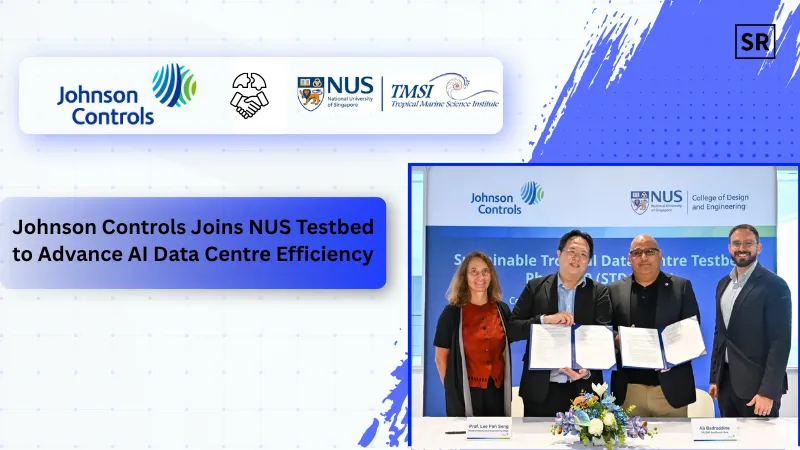
Johnson Controls has joined the National University of Singapore’s (NUS) Sustainable Tropical Data Centre Testbed (STDCT) to support research into more efficient data centre technologies for hot and humid climates.
The collaboration comes as the rapid growth of artificial intelligence (AI) increases demand for computing infrastructure. Higher computing workloads are also creating greater challenges around cooling, energy consumption and water use in data centres.
Key Highlights
- Johnson Controls joins NUS’s Sustainable Tropical Data Centre Testbed.
- The collaboration will focus on cooling, building management and data centre technologies.
- The research aims to improve energy and water efficiency in tropical data centres.
- AI-driven computing demand is increasing the need for advanced cooling solutions.
Johnson Controls to Support Tropical Data Centre Research
RECOMMENDED FOR YOU



Through the partnership, Johnson Controls will contribute its expertise in cooling systems, building management and data centre technologies to the NUS research programme.
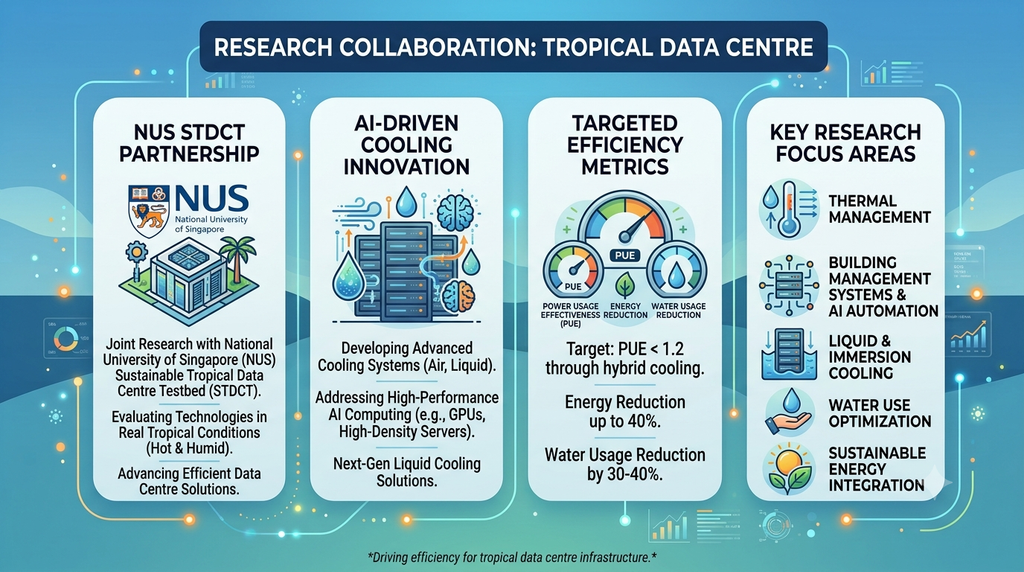
The STDCT provides researchers and industry partners with an environment to test data centre technologies under conditions similar to Singapore’s hot and humid climate. This allows new solutions to be evaluated in practical operating conditions rather than only in conventional laboratory environments.
The need for efficient cooling has become increasingly important as AI workloads require more powerful computing infrastructure. High-performance servers generate significant amounts of heat, increasing the demand for advanced cooling technologies.
The collaboration will allow Johnson Controls to work with NUS researchers on solutions designed to manage increasing computing requirements while improving the efficiency of data centre operations.
NUS Testbed Targets Energy and Water Efficiency
The Sustainable Tropical Data Centre Testbed was developed by NUS and Nanyang Technological University, Singapore, with support from Singapore’s National Research Foundation and industry partners.
The facility focuses on technologies that can reduce the energy and water requirements of data centres. Its targets include reducing energy consumption by up to 40% and water usage by 30% to 40%.
The testbed also aims to achieve a Power Usage Effectiveness (PUE) below 1.2 through a combination of air and liquid cooling technologies.
As AI increases computing density, liquid cooling is receiving greater attention because it can help manage the higher heat generated by advanced computing equipment.
STDCT 2.0 to Explore Next-Generation Data Centre Technologies
The research is also expected to expand through STDCT 2.0. In 2025, NUS and JTC announced plans to explore a new testbed on Jurong Island.
The planned facility is expected to examine technologies for higher computing densities associated with AI, along with advanced liquid cooling, water-saving systems and other energy-efficient solutions.
For Johnson Controls, participation in the programme provides an opportunity to evaluate its technologies under tropical operating conditions. The findings could also be relevant to data centre operators across Southeast Asia as demand for AI computing and cloud infrastructure continues to increase.
About Johnson Controls
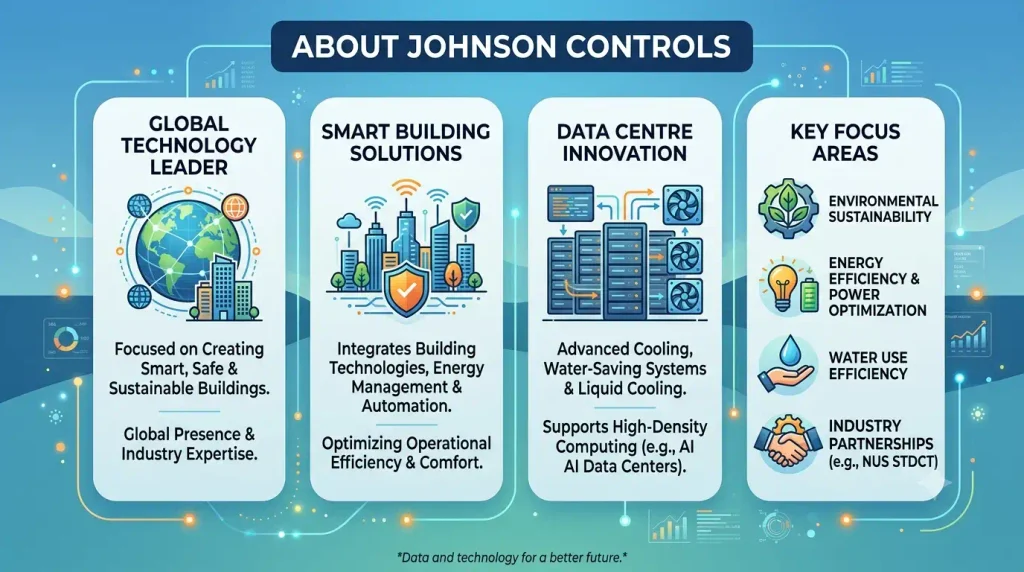
Johnson Controls is a global technology company focused on building and data centre solutions. Its technologies cover areas including building management, cooling, automation and energy efficiency.
Through its involvement with the NUS testbed, the company will contribute its expertise to research focused on improving the efficiency and sustainability of data centre infrastructure in tropical environments.
Read Also - Shorooq and Presight Join Maven Robotics’ $100 Mn Expand Industrial Robot Fleet
Recommended Stories for You

Yan li May 26, 2026

Nguyen Minh Mar 12, 2024

Yan li May 7, 2026

Nguyen Minh Oct 1, 2026

Yan li Dec 24, 2024

Yan li Apr 14, 2026
Trending Stories

Soter Insure Raises Series A Funding to Expand Digital Asset Insurance Solutions

UAE-based Dubizzle acquires Egyptian Hatla2ee

[FUNDING NEWS] UAE-Based Mamo has Secured $3.4 Million in Funding

Amwal Capital Launches Shariah-Compliant Trust Fund to Support Startups

UAE-Based Endocare Secures Funding to Expand Personalised Metabolic Health Across Middle East

Omnispay secures US$1.5mn seed funding led by Mercatus Capital

UAE-Based Hala Partnered with MwaslaTech

[FUNDING NEWS] UAE-based B2B Marketplace Plain Tiger Secures undisclosed amount Funding