


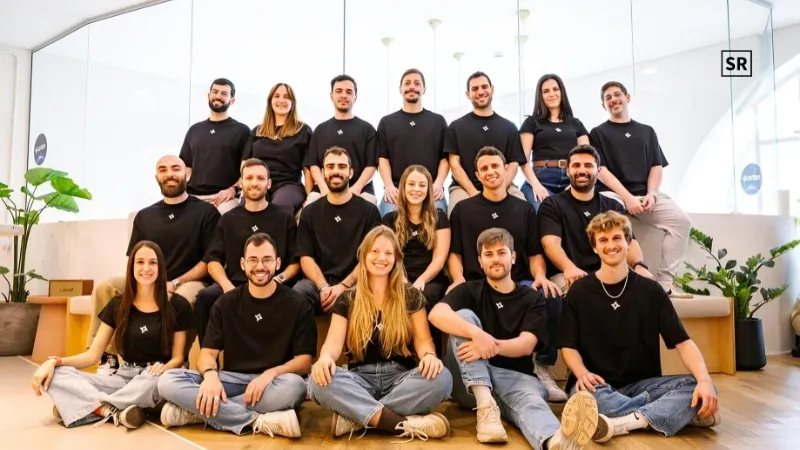
Orion Security is a cybersecurity company that builds AI-powered tools to protect sensitive data by understanding its context. The company has raised $32 million in a Series A funding round led by Norwest Venture Partners, with support from IBM and existing investors like PICO Venture Partners and Lama Partners.
This funding round happened less than a year after Orion Security’s Seed round. With this latest investment, the company’s total funding has reached $38 million since it was founded.
Orion was founded in 2024 by CEO Nitay Milner, who earlier worked as a product leader at Epsagon (later acquired by Cisco), and CTO Jonathan Kreiner, who previously led application security at WalkMe. The company was started with strong experience in cybersecurity and product development.
Orion currently has a team of 20 employees and is growing quickly. It is expanding its development centers in Israel and New York and is actively hiring for various roles to support its growth.
Orion has built an autonomous platform that aims to replace traditional data loss prevention (DLP) tools. Unlike older DLP systems that depend on manually set rules and policies—which can slow down work and need regular updates—Orion’s platform works more intelligently and reduces the need for constant maintenance.
“We realized that legacy DLP solutions simply do not prevent data loss,” Milner told to media. “Even newer products provide only snapshots and fail to track how information actually moves. As a result, companies continue to suffer major breaches. Our approach uses large language models to analyze all outbound information across multiple parameters and determine in real time whether an event represents a leak or legitimate activity.”
“We received approaches from many leading funds and chose Norwest,” he said. “IBM has been in close contact with us from the beginning, and this investment reflects a strategic partnership to integrate our technology with their platforms. Data security is at a peak moment, this will be a market that produces many companies worth more than $10 billion.”
For nearly 20 years, companies have depended on DLP tools that use thousands of manually created rules. These systems need frequent updates, create many false alerts, and still do not fully protect sensitive data.
They also struggle with today’s challenges, such as AI-based work processes, widespread use of SaaS tools, and remote or distributed teams. Since these tools only protect against known risks, they often fail to stop new and unexpected types of data leaks.
Read More- HORIBA Acquires Pristine Deeptech to Strengthen R&D Capabilities
