

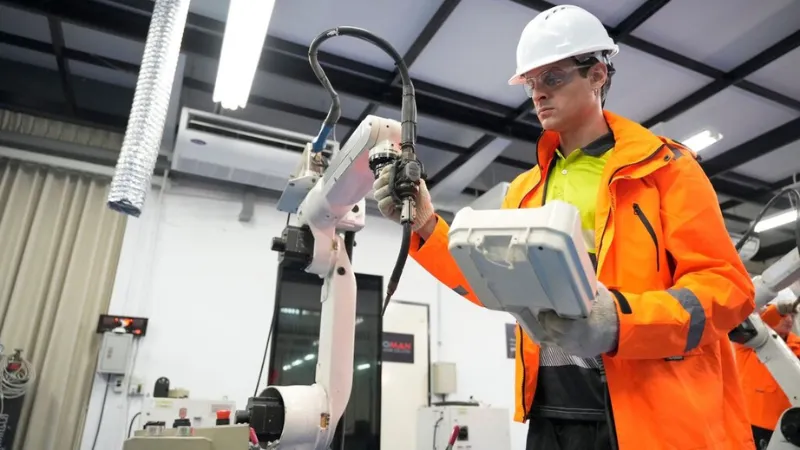
Most operations teams aren't struggling because people aren't trying hard enough. They're struggling because the tools underneath the work are quietly creating drag, every single day. Manual approval chains. Data is locked inside departmental silos. Systems that don't talk to each other. These aren't dramatic failures. They're slow bleeds.
 Follow us
 Follow us
The right technology in operations doesn't just speed things up at the margins. It changes the fundamental shape of how work moves through your organization. When you get those choices right, workflows stop being chaotic and start becoming predictable, scalable, and measurably better for the people actually doing the work.
The Four Pillars of Digital Transformation in Operations
Digital transformation isn't a single project you finish and check off. It's four reinforcing pillars, and they work best when they work together.
Digital Foundation: One Source of Truth
When every team pulls from the same data model, decisions get faster and errors drop. APIs and event-driven architecture keep operational systems communicating in real time, no manual handoffs, no version confusion.
RECOMMENDED FOR YOU

Why Digital Trust Will Shape the Future of Startup Growth in 2026 and Beyond?
Startuprise
Feb 18, 2026


Cybersecurity Trends in 2026: The Year Trust Becomes the Ultimate Firewall
Startuprise
Oct 29, 2025
Network infrastructure matters enormously here. For teams managing infrastructure automation, you need a validated, programmable data layer sitting beneath your day-to-day workflows. A platform like Infrahub for scalable network automation addresses exactly that, providing a schema-first source of truth for network state that integrates directly with automation tools and AI workflows.
Automation: Orchestrating Across Teams and Systems
Task automation handles individual steps. Process automation strings those steps together. End-to-end orchestration coordinates entire workflows across systems and departments, auto-routing requests, provisioning resources, even remediating incidents without a human in the loop.
Intelligence: Embedding AI Where It Actually Helps
Embedding AI into workflows means catching anomalies before they escalate, forecasting SLA breaches before they happen, and surfacing recommendations without making an analyst dig through dashboards manually. It's not AI for the sake of AI. It's AI applied to specific, high-friction decision points.
Experience: Designing for the People Doing the Work
Technology that frontline staff won't actually use delivers zero value. Simple interfaces, self-service portals, and chat-based workflows reduce friction for the people closest to the work, not just the IT team that built the system. This pillar gets underestimated constantly, and it's often where adoption fails.
Understanding Technology in Operations and Modern Workflow Challenges
Here's the honest truth about modern operations: everything depends on everything else. People, processes, data, tools, they form an ecosystem. Pull on one piece, and the rest moves too. That interdependence is both the challenge and the opportunity.
Core Concepts Behind Workflow Automation
Improving operational workflows begins with a clear-eyed look at what's actually happening inside your processes right now, not what you think is happening. Technology in operations spans a wide range.
On one end, you have simple digitization: moving paper forms online. On the other hand, you have full workflow automation technology that removes humans from repetitive decisions entirely. Real transformation sits somewhere deeper; it's about redesigning how work flows across systems and teams, not just digitizing what already exists.
Think of it like renovating a house. Painting the walls doesn't fix a bad floor plan.
The Workflow Pain Points Nobody Talks About Enough
You've probably experienced some version of this: your team re-enters the same data across three different systems because none of them connect. Email approvals vanish into inboxes for days. Spreadsheets multiply until someone finally asks, Which version is right?
These aren't minor inconveniences. They're expensive. Companies that fully implement workflow automation report a 30% reduction in operational costs. That figure makes the case for change almost impossible to dismiss. And the hidden cost of doing nothing, rework, compliance risk, and employee burnout, doesn't show up cleanly on a budget line, which is exactly why it gets ignored.
Matching Technology to Your Actual Constraints
Not every team needs the same solution. Some organizations need faster cycle times. Others need airtight audit trails or the infrastructure to support rapid growth.
Adding more tools without a clear outcome in mind doesn't solve chaos; it creates more of it. The goal is alignment: matching the technology to specific operational constraints and real business objectives.
The Strategic Role of Technology in Operations
Every tool investment should tie back to something you can measure. Not a vague sense that things feel smoother. Actual metrics.
Connecting Tools to Real Operational KPIs
Cycle time. Error rate. SLA adherence. Throughput. These are the numbers that tell you whether a technology investment is earning its place. An incident management workflow that once took four hours to resolve can drop to under 45 minutes with structured automation; that's not theoretical, that's documented.
What's also worth noting: employee satisfaction as a success criterion for process automation sat at 40% in 2024, slightly down from 42% in 2023, while process efficiency as a goal rose to 79%. Organizations are increasingly voting with their priorities, and efficiency is winning.
Turning Workflow Data Into a Feedback Engine
Logs. Tickets. Workflow analytics. These aren't just records; they're a map of where your operations are silently breaking down. Operational efficiency tools that surface real-time dashboards make those patterns visible before they become crises. The organizations that improve fastest treat their workflow data as a continuous feedback loop, not an archive.
Building a Roadmap That Matches Where You Actually Are
Start manual. Move to semi-automated. Then push toward intelligent orchestration. Don't skip stages; teams that rush past foundational work usually build systems that break at the worst possible moments. Stability first, sophistication second.
Workflow Automation Technologies Worth Knowing
With the pillars in place, here's a practical look at the specific technologies behind them:Technology Best For Key Limitation RPA Repetitive, rule-based tasks Brittle with UI changes Low-code/No-code Rapid process builds Limited for complex logic BPM/Workflow Engines End-to-end process design Requires process expertise Integration Platforms Cross-system data flow Can create dependency chains Hyperautomation Closing capability gaps Higher implementation complexity
Hyperautomation and Intelligent Orchestration
Hyperautomation combines RPA, AI, process mining, and integration platforms to tackle workflows no single tool can handle alone. End-to-end order management. IT incident auto-triage. Scenarios where multiple systems and decision points collide simultaneously. It's powerful and worth approaching carefully.
Tools That Actually Connect Teams
The best cross-functional workflow tools share a few consistent traits: role-based views, clear audit trails, built-in SLAs, and cross-system triggers. They don't just help one team work faster. They connect teams that historically never worked in sync.
Building Better Workflows: Where to Go From Here
Technology alone doesn't fix broken operations. But the right technology, applied to the right workflows, with real metrics and genuine governance? It transforms them, sometimes faster than you'd expect.
Start by auditing what's actually slowing your teams down most. Prioritize high-volume, high-pain workflows first. Build incrementally. Measure constantly. And resist the temptation to automate chaos instead of fixing it.
The organizations winning on operational efficiency aren't the ones with the most tools. They're the ones using fewer tools, better.
Frequently Asked Questions
How do you improve an operational workflow?
Map existing processes first, identify the real bottlenecks, then prioritize automation for high-volume, repetitive tasks. Standardize handoffs, reduce manual approvals, and establish clear ownership at every stage. Track cycle time and error rates to confirm improvements are genuine, not just perceived.
How does technology help operations management?
AI-powered systems analyze vast amounts of data, enabling real-time decision-making and business process optimization. These systems help operations managers identify bottlenecks, predict equipment failures, and adapt to shifting market conditions more quickly than traditional approaches allow.
What's the biggest mistake teams make with workflow automation?
Automating a broken process without redesigning it first. Technology amplifies whatever's already there; if the underlying workflow is inefficient, automation just makes it faster to produce bad outcomes. Fix the process. Then automate it.
Recommended Stories for You

Startuprise Jun 23, 2026

Startuprise Nov 14, 2025

Startuprise May 19, 2026

Startuprise Jun 10, 2026

Startuprise Aug 15, 2026

Startuprise Feb 17, 2026
Trending Stories

Best Gold IRA Companies for First-Time Investors Explained

Tips to find a broker in Asia

The Future of Group Health Insurance: Trends and Best Practices

Staff Augmentation Services: Access Top Talent Without Hiring Overhead
Practical Ideas to Use Custom Badges to Promote Your Business

7 Signs You Need a Financial Advisor in Singapore

Why Rent Car Dubai Is the Smartest Mobility Choice for Startups, Entrepreneurs, and Business Professionals

7 Best AI Video Generators for Creators, Marketing Teams, and Video Professionals in 2026