


Bengaluru-based quantum cybersecurity startup QNu Labs has secured Rs 200 crore($21 million) in Series A1 funding. The round was led by the National Quantum Mission along with deep-tech VC firm Speciale Invest.
SUMMARY
- QNu Labs has raised ₹200 crore ($21 million) in Series A1 funding.
- The round was led by the National Quantum Mission and Speciale Invest.
- QNu Labs will use the funds for R&D, global expansion, quantum sensing, and AI technologies.
 Follow us
 Follow us
Sony Innovation Fund, Gaja Capital, and Artha Ventures also participated in the round.
The latest funding takes QNu Labs’ total capital raised to Rs 375 crore.
The company will use the new funds to increase its research and development efforts, expand its sales and go to market operations in India and overseas, and develop new technologies in quantum sensing and artificial intelligence.
RECOMMENDED FOR YOU

KuCoin Partners With FinChain to Add FUSD as Collateral for Institutional Trading
Nguyen Minh
Aug 31, 2026


QNu Labs will also invest part of the funding in an approved research and development project focused on building the technology infrastructure for India’s Quantum Secure and Sensing Networks.
QNu Labs co-founder Sunil Gupta said, "India has moved early on in the quantum era. The National Quantum Mission, through its IIT Madras hub, has laid the foundation and with implementation timelines published in 2026 across sectors, quantum-safe technology is shifting from policy to commercial deployment."
About QNu Labs
QNu Labs was incubated at IIT Madras in 2016 and was founded by Srinivasa Rao Aluri and Sunil Gupta. The company develops quantum-safe cybersecurity solutions and says its products are deployed across government, critical infrastructure, and banking financial services and insurance (BFSI) sectors. QNu Labs has a team of around 160 engineers, physicists and mathematicians.
The company is also working on an approved RDI programme project to develop the technology backbone for India’s Quantum Secure and Sensing Networks (IQSN).
QNu Labs plans to expand its quantum-safe technology stack into quantum sensing and AI increase deployments across critical sectors and build capabilities to meet the growing global demand for quantum-safe migration.
Recommended Stories for You


Yan li Feb 11, 2026

Yan li Mar 11, 2026

Yan li Sep 22, 2025

Nguyen Minh Mar 2, 2024

Nguyen Minh Jul 9, 2026
Trending Stories

Singapore-Based Trinasolar has Partnered with A*STAR

Singtel’s NCS Launches $102M Plan to Boost AI Across Asia
[FUNDING NEWS] Singapore-Based BitLayer Labs has Secured $11 Million in Series A Round Funding

Atomionics raises $12.7 million Pre-Series A round
iCapital Raises $820M with Support from Temasek

ClavystBio and A*STAR partner to back MedTech ventures in Singapore

PATRIZIA and Mitsui team up with Kaer to boost Cooling-as-a-Service growth in Asia
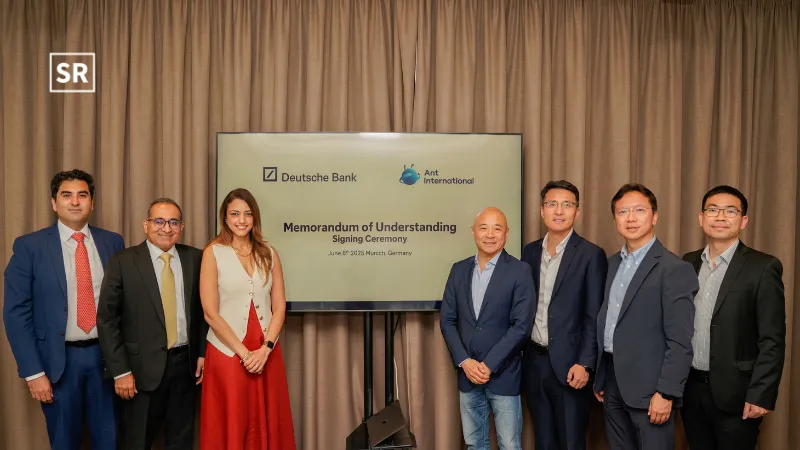
Ant International partners Deutsche Bank to provide integrated cross-border payment solutions to global merchants