

At the World Economic Forum meeting in Davos in January, Canadian Prime Minister Mark Carney said the world is facing a major disruption rather than a normal period of change. His speech highlighted growing concerns about global uncertainty and instability.
 Follow us
 Follow us
A week before the Davos meeting, the World Economic Forum released its Global Risks Report 2026. Around 50% of the 1,300 experts surveyed said they feel negative about the world’s future over the next two years. The report identified geopolitical tensions, economic problems and technological risks as major short-term challenges. It also warned that environmental issues and climate concerns are receiving less attention because governments and businesses are focusing more on urgent global crises.
INSEAD faculty members also shared similar concerns in a survey conducted in late 2025. More than 60 professors from different academic fields were asked about the biggest social and business risks for 2026. Like the previous year, they identified geopolitical conflicts, social instability, income inequality, and climate change as major threats to businesses. However, unlike 2025 when inflation and recession were major worries, many experts now see AI and digital transformation as both a major opportunity and a major.
AI and digital transformation
At INSEAD, researchers and teachers are actively studying how AI is affecting businesses and society. This is reflected in a recent survey where 61% of INSEAD faculty members said AI and digital transformation are among the most important areas businesses should focus on in 2026. At the same time, 44% also believe AI could become a major risk for companies.
RECOMMENDED FOR YOU


Among all the issues discussed in the survey, AI was seen as both the biggest opportunity and one of the biggest threats. This is because AI is changing many important areas such as business, economics, and global politics. AI has the power to improve productivity, innovation, and decision-making, but it can also create new challenges and risks.
Experts also believe that the rise of AI could increase social inequality. Currently, most advanced AI technology and resources are controlled by only a few powerful countries. Wealthier nations may benefit more from AI and improve productivity much faster than lower-income countries. Meanwhile, middle-income countries may try to reduce their dependence on major AI powers. Because of this, governments and regulators are expected to place more focus on monitoring and regulating AI technology in the future.
There are also mixed opinions about AI’s impact on climate and sustainability. Many business leaders believe AI can help companies improve their sustainability efforts and operate more efficiently. However, experts are also concerned that AI systems require large amounts of electricity and water which could increase energy consumption and reduce some of the environmental progress already made by businesses.
Income and wealth inequality
Global inequality continues to be a major issue in 2026. In a recent survey, 17% of faculty members said inequality is one of the biggest threats facing the world. In comparison, 31% believed it also creates important opportunities for businesses to help solve social and economic problems.
According to the United Nations Department of Economic and Social Affairs (DESA), the global economy has remained stable despite recent challenges, but economic growth is not equal across countries. Global economic growth is expected to slow slightly to 2.7% in 2026, compared to 2.8% in 2025, and this is still lower than the average growth rate before the pandemic. The World Bank also reported that while most advanced economies now have higher incomes than before the pandemic, many developing countries are still struggling and have not fully recovered. Low-income families, rural communities, and women are facing the biggest financial pressures due to rising living costs.
Experts say inequality is becoming more serious because wealthy and low-income groups often experience very different realities. A report by Edelman showed that high-income people are more likely to trust governments, businesses, media, and organizations compared to low-income populations. The World Economic Forum (WEF) also described inequality as one of the world’s most connected global risks because it is closely linked to other major issues such as climate change, artificial intelligence, and economic instability.
Climate Change
The importance of climate change as a business issue has slightly decreased this year. Around 41% of INSEAD faculty members said climate change is still an important area that businesses should focus on, compared to 50% last year. Also, only 17% saw climate change as a major business threat, down from 26% previously. However, this change likely reflects the growing urgency of other global problems rather than any real improvement in climate conditions.
According to the World Economic Forum (WEF), short-term global risks over the next two years include geopolitical tensions, misinformation, and social polarization. But when looking at the next 10 years, the biggest risks are still related to climate change. These include extreme weather events, loss of biodiversity, ecosystem collapse, and serious damage to Earth’s natural systems. Many climate scientists and United Nations experts now believe that limiting global warming to 1.5°C may no longer be achievable.
Despite changing global priorities, INSEAD continues to focus strongly on sustainability education. The institution has updated its MBA program to include sustainability topics in both core and elective courses. INSEAD believes that understanding sustainability challenges and recognizing the business opportunities connected to them will remain very important for future business leaders.
Conclusion
The world is facing many challenges in 2026, including political tensions, economic uncertainty, AI-related risks, inequality, and climate change. Businesses and governments need to adapt quickly as technology and global conditions continue to change. At the same time these challenges are also creating new opportunities for innovation, sustainability, and digital growth. Experts believe that companies focusing on responsible technology, environmental sustainability and long-term social impact will be better prepared for the future. As the global economy continues to evolve, business leaders will need to balance growth, innovation, and social responsibility to build a more stable and sustainable world.
What are the major global risks in 2026?
Why is AI considered both an opportunity and a risk?
Recommended Stories for You
Yan li May 15, 2025
Team SR Dec 29, 2025
Team SR Jul 1, 2024
Nguyen Minh Sep 23, 2026

Team SR Jan 5, 2026
Trending Stories
Top 10 Strongest Currency in Asia 2025

What is a vision statement of a Company
Best Startup Industries In 2026
China lifts ban on Boeing deliveries after Trump’s tariff deal
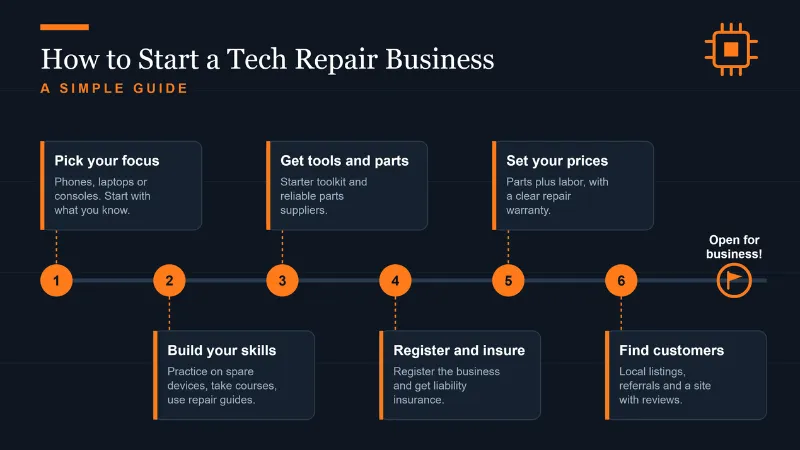
How to Start a Tech Repair Business: A Simple Guide

Ather Energy Shares Surge 2% on Strong Market Debut in India

Hua Hong and SMIC Shares Drop Sharply Amid Rising U.S.-China Tensions
Leading Asian Healthtech startups in 2026