


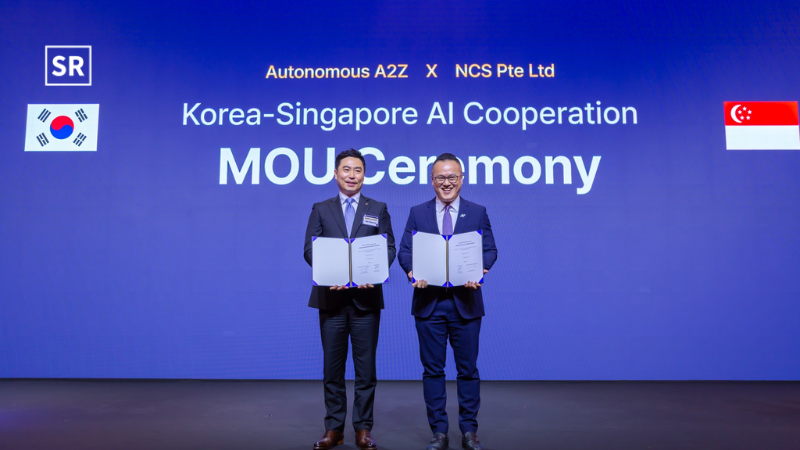
NCS and South Korean autonomous driving company Autonomous A2Z have signed a memorandum of understanding to develop and deploy autonomous mobility systems in Singapore. The focus will be on security, governance, and regulatory compliance.
The partnership will combine A2Z’s autonomous vehicle platforms with NCS’ strengths in systems integration, sovereign AI and cybersecurity. The companies have created a joint roadmap that includes demonstrations, pilot projects and sharing technical knowledge between their teams.
NCS will lead the integration of autonomous technologies into real-world operations, ensuring safety, smooth performance, and compliance with Singapore’s regulations.
A2Z will provide its full autonomous vehicle technology, along with engineering support and expertise. NCS will bring its experience in managing large technology projects and running security programmes for public sector and critical infrastructure systems.
The partnership also includes upgrading selected vehicles with autonomous features. This is expected to improve data collection, real-time monitoring, and reporting for better oversight and compliance.
“In uniting A2Z’s world-class platforms with NCS’ deep expertise and capabilities, we turn leading-edge technology into robust and scalable operations in the autonomous vehicle space,” said Sam Liew, CEO-designate, NCS.
“This collaboration represents a significant milestone in advancing the safe and scalable deployment of autonomous driving technology,” said Jihyeong Han, CEO, A2Z. “By integrating A2Z’s full-stack autonomous driving platform with NCS’ expertise in systems integration, sovereign AI, and cybersecurity we are paving the way toward a trusted and resilient autonomous mobility ecosystem.”
The pilot plan will include phased deployments and live demonstrations. It will also involve knowledge sharing, with joint engineering work and a smooth handover as the systems move from testing to real-world use.
Singapore has been actively testing and deploying autonomous vehicles, as government bodies and companies explore new models for transport, logistics, and site operations. This agreement reflects efforts to combine vehicle autonomy with strong systems integration, safety oversight, and cybersecurity controls.
NCS said the initiative also addresses long-term labour shortages. It sees autonomous mobility as a way to manage manpower constraints and as part of a wider move towards robotics and what it describes as “Physical AI.”
Read also- TricorBraun ANZ Appoints Louise Baker as Managing Director
