

Singapore AI Startup Sparkonomy Launches Open Creator Graph to Give Creators Control
Sep 30, 2026 | By Carmela Catilo
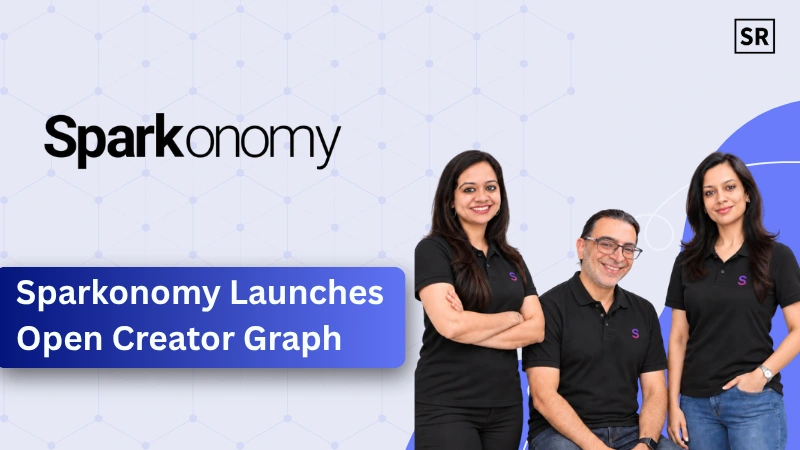
Singapore-based AI infrastructure startup Sparkonomy has launched the Open Creator Graph, a free platform designed to help creators establish their identity and set clear terms for how AI systems can use their names, images, voices, likenesses, and work.
 Follow us
 Follow us
The platform was launched on September 29, 2026. It allows creators to create a public, machine-readable record that can be used to communicate their identity and AI consent across platforms.
What Is the Open Creator Graph?
The Open Creator Graph is designed to address two challenges faced by creators in the AI era: being accurately identified by AI systems and having greater control over how their identity and content are used.
Creators can claim their records by signing in through accounts on platforms such as Instagram, YouTube, TikTok, or X. They can then set their preferences for how AI systems may use different parts of their identity.
RECOMMENDED FOR YOU


Sparkonomy said creators can choose between three consent levels: Allowed, Conditional, and Prohibited.
Under the company's system, "Allowed" permits AI use, while "Conditional" allows certain uses but requires permission for activities such as creating deepfakes or voice clones. "Prohibited" indicates that the creator does not permit the use of their identity. If no preference has been set, the record is marked as "Unknown" rather than being treated as permission.
Sparkonomy's AI Misrepresentation Study
Sparkonomy said its platform was developed in response to problems with how AI systems identify and describe creators.
The company conducted the AI Misrepresentation Study (AMISS), which examined 10,000 creators globally, including creators with between 1,000 and more than five million followers.
According to Sparkonomy, only one of the 10,000 creators was accurately described by all five AI systems tested. The company also reported that 67% of the creators were not accurately described by any of the five systems.
Sparkonomy said the study involved 50,000 queries submitted in September 2026 using creators' handles and platform information. The AI systems tested included ChatGPT, Gemini, Grok, Muse and Qwen.
These figures are based on Sparkonomy's own study and methodology.
How the Open Creator Graph Works
A creator can claim a record using an existing social media account. The record is intended to provide a single identity profile that can be read by both people and machines.
The platform also provides machine-readable versions of the information, including JSON-LD, XML, TDMRep, and plaintext formats.
According to Sparkonomy, this approach is intended to make creator preferences easier for search engines and AI systems to identify and process.
The company said the Open Creator Graph already includes one million creator records that can be claimed, with additional records being added.
Sparkonomy said creators do not have to pay a setup fee or subscription fee, and there is no minimum follower requirement to claim a record.
Digital Consent Records
Sparkonomy said each creator's consent certificate is digitally signed and added to a tamper-evident public log.
The company also said the records are independently timestamped through a qualified service under the EU's eIDAS framework. Sparkonomy describes these features as a way for creators to maintain evidence of the terms they have declared if those terms are later disputed.
The launch comes as governments, courts, technology companies, and creators continue to examine how existing rights should apply to AI-generated or AI-assisted uses of a person's identity and creative work.
What Sparkonomy's Founders Said
Guneet Singh, co-founder of Sparkonomy, said the company wanted to address the difference between the scale of AI systems and the existing processes for managing consent.
“AI operates at machine scale. AI Consent still operates at human scale: manual, slow and expensive. To close that gap, we built the Open Creator Graph, a free, public identity and consent record that every Creator worldwide can use, not just the famous ones.”
Megha Thareja Tyagi, co-founder of Sparkonomy, said the platform is intended to give creators more control over decisions involving their work and identity.
“The point was never to keep AI away from Creators’ work; it’s to put the Creator in charge of the decision, before it’s made for them.”
Vipasha Joshi, co-founder of Sparkonomy, said creators at different stages face concerns around AI visibility and unauthorized use of their identities.
“Neither of them wants a lawsuit. They want a simple way to be found, and to say what’s off-limits.”
About Sparkonomy
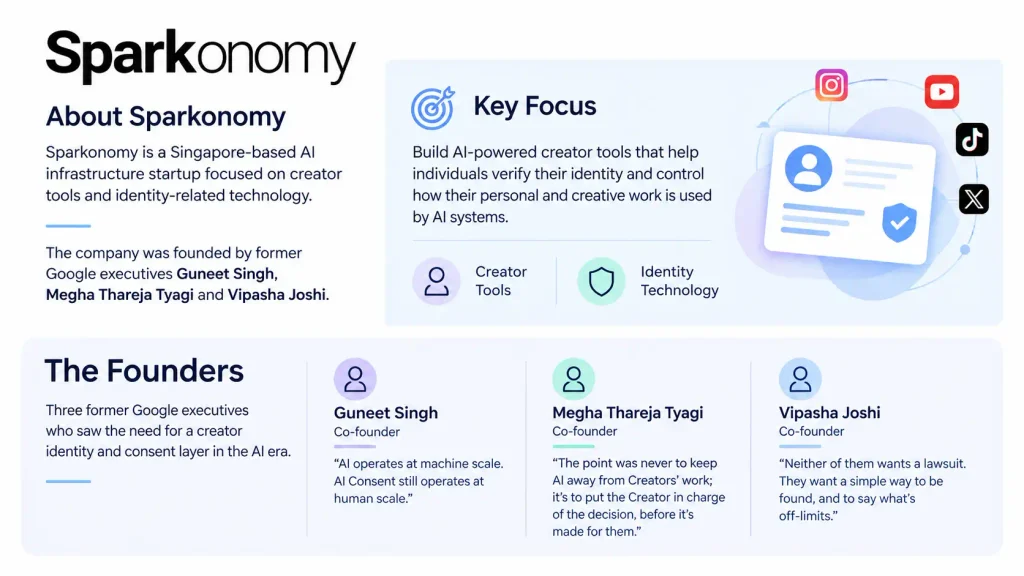
Sparkonomy is a Singapore-based AI infrastructure startup focused on creator tools and identity related technology. The company was founded by former Google executives Guneet Singh, Megha Thareja Tyagi, and Vipasha Joshi.
Its Open Creator Graph is focused on creating an open identity and consent layer that allows creators to establish how AI systems can identify and use their identity and creative work.
Read Also - Rig Security Secures $12 Mn to Strengthen AI Agent Identity Security
Recommended Stories for You
Nguyen Minh Jul 27, 2026
Nguyen Minh Jul 24, 2026
Nguyen Minh Sep 8, 2026
Startuprise Apr 17, 2025
Yan li Oct 6, 2025
Yan li Jul 2, 2025
Trending Stories
[FUNDING NEWS] India-Based Agrizy has Secured $9.8 Million in Series A Round Funding

[FUNDING NEWS] India-Based OYO To Secures $50 Million In Funding

Composio Raises $25M Funding Led by Lightspeed Venture Partners

Medtech Startup Innovodigm Raises INR 5.5 Crore in Seed Funding Round
Incuspaze Acquires VSKOUT to Boost Tech-Enabled Real Estate Solutions for GCCs

Netgear Acquires Bengaluru Cybersecurity Startup Exium

StrideGreen Secures $3.5M Seed Funding to Drive Climate-Tech Growth

Delhivery Acquires Controlling Stake in Ecom Express