

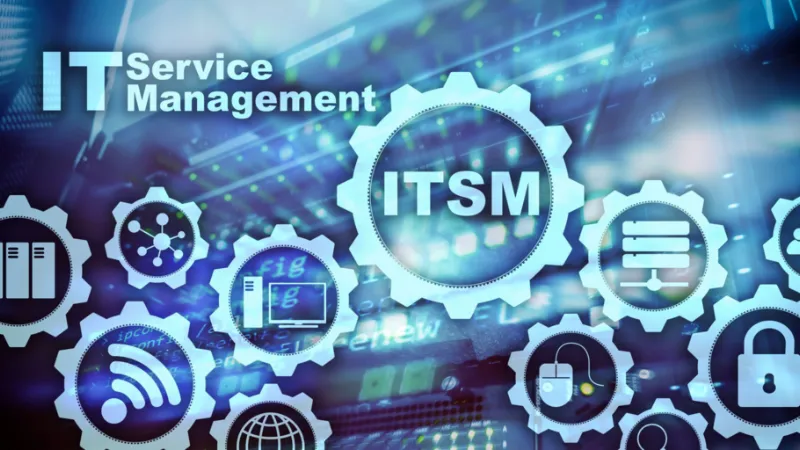
Building a startup without reliable IT infrastructure underneath it? That's roughly equivalent to constructing something enormous on completely unstable ground. It holds together — until it doesn't. The pressure on founders today to move faster, operate smarter, and defend against growing threats has reached a genuinely new intensity.
 Follow us
 Follow us
Consider this: ”88 percent of US companies now say they are reaping performance and productivity dividends from their transformations which is double the rate from last year's survey”. Double. In a single year. That statistic doesn't leave much room for debate. Startup IT support has shifted from a nice-to-have into something your entire business model depends on.
How Startup IT Support Has Fundamentally Evolved
Ten years ago, most startup founders treated IT like a maintenance closet. You opened it when something broke, fixed it quickly, and shut it again. That philosophy is gone. What's replaced it is something far more deliberate: a strategic discipline that directly influences how your company scales, who you hire, and how you compete.
Digital-First Business Models Are Rewriting the Rules
Today's startups don't inherit outdated infrastructure. They build from scratch, which is liberating, but it also means there's no fallback. Every transaction, customer touchpoint, and revenue stream runs entirely through technology. That reality demands IT systems that are reliable, secure, and genuinely scalable from the very first week, not bolted on six months after launch when things start breaking.
RECOMMENDED FOR YOU


Managed Services Are Filling a Very Real Gap
Summerville, SC sits just outside Charleston, a community with strong roots, a rapidly expanding business corridor, and a professional base that's becoming increasingly tech-savvy. Startups operating in this region no longer have to rely solely on local talent for technical support.
For lean, high-growth teams in this area, managed IT services in Summerville SC offer enterprise-grade capabilities without the overhead of building an internal team — which, frankly, most early-stage companies can't justify yet.
Global Shifts Have Changed What Startups Actually Need
Remote work didn't just change where people sit, it changed what IT systems must do. Add to that the escalating sophistication of cybersecurity threats, the rapid adoption of AI tools, and the growing reliance on automation.
Modern IT solutions for startups must now support distributed teams, cloud-native environments, and continuous threat monitoring. That's a fundamentally different brief than what IT looked like even five years ago.
The Technology Trends Reshaping Startup IT Right Now
Emerging technology isn't just expanding what's possible, it's raising what's expected. The gap between startups that invest in tech and those that don't is widening quickly. Here's what's driving that gap: " 75% of rapid growth companies plan to spend more on software in the coming years; well above the 60% average " Gartner, 2024. High-growth companies are doubling down. The technology trends for startups worth watching aren't abstract, they're already changing operations on the ground.
AI Automation Is Actively Reshaping IT Support
Automated helpdesks, predictive issue detection, and intelligent monitoring aren't distant concepts anymore. AI is cutting ticket resolution times dramatically and catching infrastructure issues before users ever notice something's wrong. The future of IT support belongs to systems capable of self-correcting, or at minimum, alerting your team before disruption spreads.
Zero Trust Security Isn't Paranoia — It's Architecture
Zero trust means no device, user, or application gets automatic access. Multi-factor authentication, real-time threat detection, and segmented cloud access form a security posture that serious startups build early. Beyond protecting data, it builds the kind of customer trust that actually closes enterprise deals.
Edge Computing and 5G Are Accelerating Real-Time Operations
Processing data closer to where it originates reduces latency significantly. Pair that with 5G connectivity, and startups managing IoT devices or real-time pipelines can run leaner, faster operations without depending entirely on centralized cloud infrastructure.
Cloud-First Infrastructure Removes Geographic Constraints
Many cloud platforms let distributed teams operate with the same access and security as any traditional office. Geographic barriers to scaling effectively no longer exist in the way they once did.
Choosing the Right IT Support: What Actually Matters
Understanding the landscape is important. Translating it into decisions your company can act on — that's where founders genuinely gain ground.
Your IT Roadmap Should Connect to Business Milestones
A real IT roadmap isn't a wish list. It's a living document that ties every technology decision to something your business is actually trying to accomplish. Modular architectures give you the flexibility to add capability without tearing everything apart every 18 months when priorities shift.
In-House vs. Managed: The Cost Equation Is Clearer Than It Looks
In-house IT staff brings deep familiarity with your specific systems — but also significant fixed costs. Managed service providers typically deliver broader expertise at a considerably lower total cost of ownership, particularly before you need a dedicated CTO. For most early-stage startups, the math isn't close.
Integrating IT Solutions Into Daily Operations
Selecting the right IT support is genuinely only half the challenge. The real advantage comes from embedding those solutions into how your team actually works day-to-day.
Distributed Teams Need Deliberately Integrated Tools
When communication apps are configured properly with single sign-on, layered access controls, and automated cloud backups, they become the connective tissue of a distributed startup. Done right, they reduce friction without requiring constant IT intervention.
Security Culture Is More Valuable Than Any Single Tool
Technology alone doesn't stop breaches; people do. Regular training, simulated phishing exercises, and documented protocols turn your entire team into a frontline defense. A security-aware workforce is one of the most cost-effective protective investments any startup can make.
Proactive Monitoring Beats Reactive Firefighting Every Time
Waiting for users to surface problems is a reactive strategy that quietly drains resources. Automated monitoring with AI-backed alerting catches anomalies in real time — often resolving issues before any human has noticed the disruption.
Turning IT Into a Growth Lever
The startups growing fastest aren't just managing IT; they're using it strategically.
Every IT Investment Should Tie Back to a Business Outcome
When IT and business strategy are genuinely aligned, technology stops being a cost center. It becomes a growth driver. Revenue goals, efficiency targets, competitive positioning, every infrastructure decision should map to one of those.
Real-World Results Are Becoming the New Standard
A SaaS startup shifts to managed IT services and cuts unplanned downtime by 60% in six months. A remote-first e-commerce company implements zero trust and passes its SOC 2 audit on the first attempt. These outcomes aren't outliers anymore, they're increasingly what serious startups expect.
Essential Questions Every Startup Founder Should Be Asking
What IT support models work best for fast-growing startups?
Managed service providers offer the strongest balance of cost efficiency and technical depth, scaling alongside your business without the overhead of internal headcount.
Which emerging technologies deserve the most attention?
AI-powered monitoring, zero trust security, and cloud-native infrastructure deliver the highest ROI for most startups — particularly tools that reduce manual intervention while improving reliability.
How should founders budget for future IT needs?
Start with a baseline audit. Project costs against your 12 and 24-month growth plans, then build in a 15–20% contingency buffer for unexpected infrastructure or security needs.
Your Next Move Starts Now
Smart startup IT support in a digital-first economy is never just about keeping servers running. It's about building infrastructure that genuinely grows alongside your ambitions. Audit where you stand today. Identify the tools that reduce manual overhead. Find a partner who's as invested in your growth trajectory as you are. The startups pulling ahead right now aren't operating with the largest budgets — they're making sharper technology decisions, earlier than their competitors. That advantage is available to you too. Start building it today.
Recommended Stories for You

Startuprise Nov 14, 2025

Startuprise Dec 13, 2025

Startuprise Oct 8, 2026

Startuprise Apr 2, 2026

Startuprise Aug 22, 2026
Startuprise Jun 11, 2026
Trending Stories

Best Gold IRA Companies for First-Time Investors Explained

Tips to find a broker in Asia

The Future of Group Health Insurance: Trends and Best Practices
Staff Augmentation Services: Access Top Talent Without Hiring Overhead

Practical Ideas to Use Custom Badges to Promote Your Business

7 Signs You Need a Financial Advisor in Singapore

Why Rent Car Dubai Is the Smartest Mobility Choice for Startups, Entrepreneurs, and Business Professionals
7 Best AI Video Generators for Creators, Marketing Teams, and Video Professionals in 2026