

10 Israeli FoodTech Startups Transforming the Future of Food in 2026
Nov 21, 2026 | By Yan li
 Follow us
 Follow us
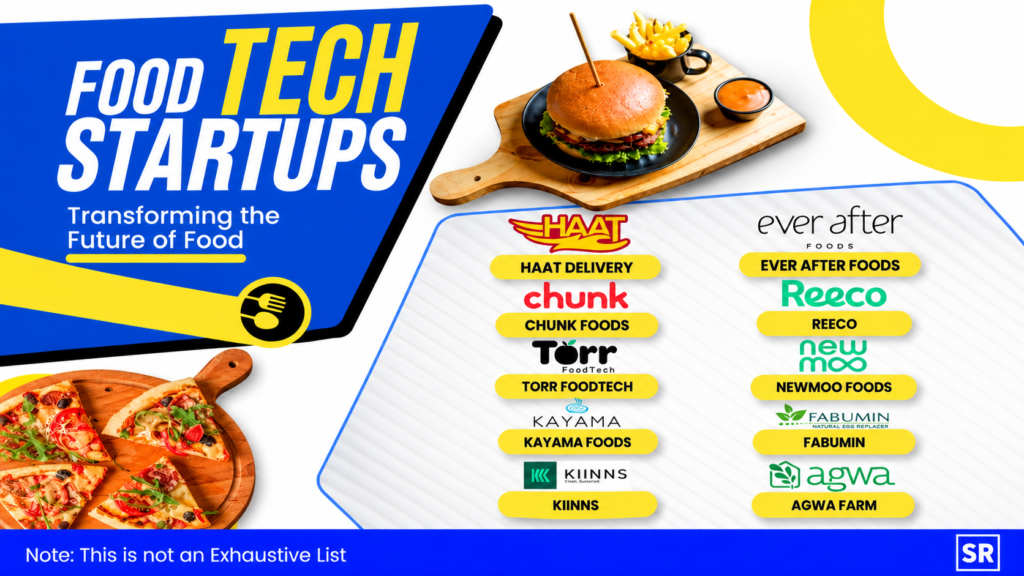
Israel's FoodTech ecosystem is developing innovative solutions to some of the biggest challenges facing the global food industry. From alternative proteins and plant-based ingredients to sustainable food production, smart delivery systems and automated food processing, startups are using technology to improve how food is produced, distributed and consumed.
As demand for healthier food, sustainable ingredients and efficient supply chains continues to grow, Israeli startups are exploring new ways to transform the food industry. Their innovations cover different areas, including cultivated meat, dairy alternatives, egg substitutes, plant-based fats, food manufacturing and digital food services.
1. HAAT Delivery
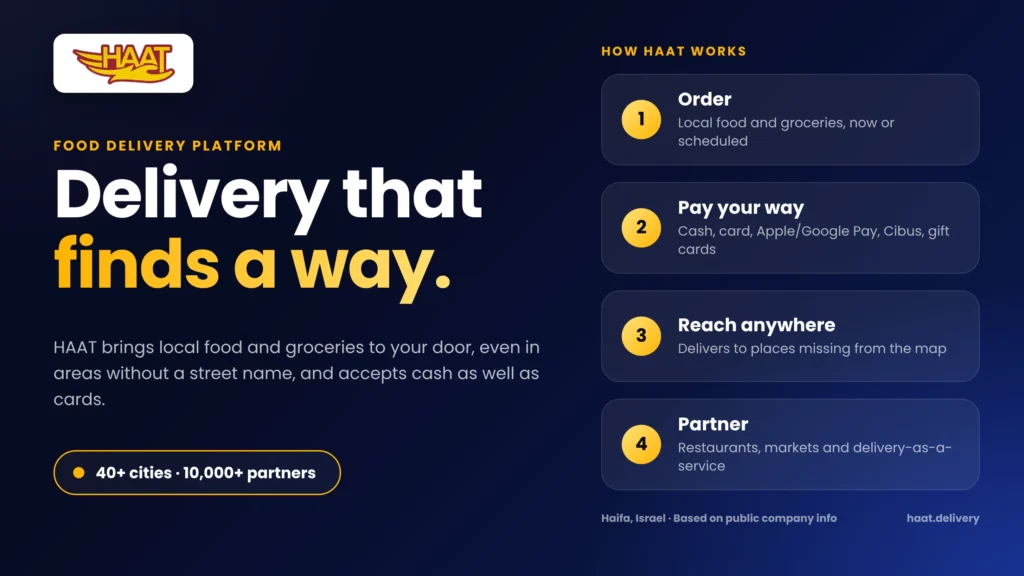
HAAT Delivery is transforming food delivery by making restaurant meals, groceries and other local products more accessible. The company focuses on communities and locations that traditional delivery platforms often struggle to serve, including areas without clearly defined street addresses.
Its technology connects customers, restaurants, local businesses and delivery partners through a single platform. Customers can order food and groceries, choose immediate or scheduled deliveries and pay using different payment methods, including cash, credit cards and digital wallets.
HAAT also provides businesses with delivery management, marketing services and access to a network of couriers. According to its website, the platform operates in more than 40 cities and works with over 10,000 business partners.
2. Ever After Foods
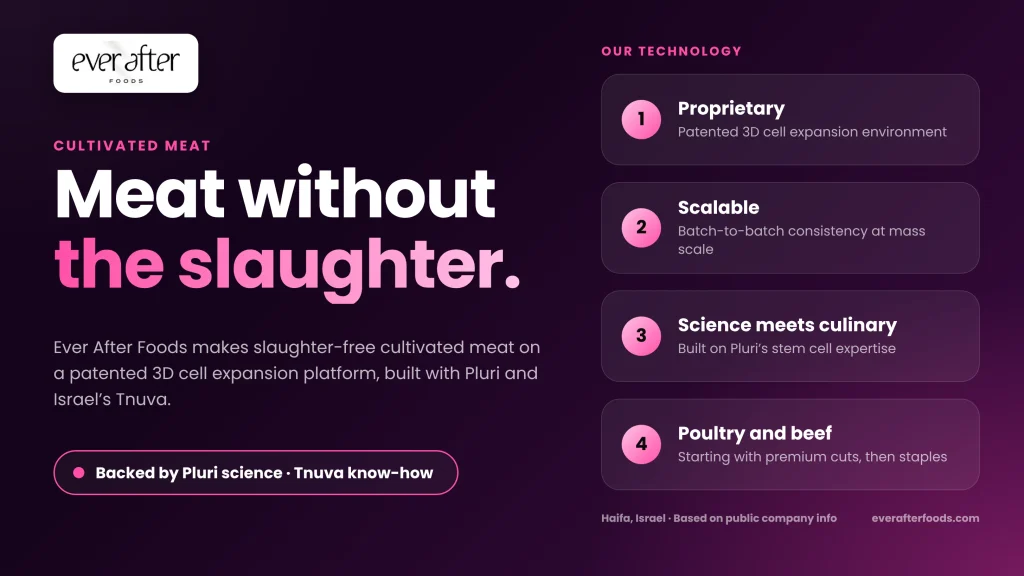
Ever After Foods is developing technology to produce cultivated meat without traditional animal slaughter. The company aims to transform meat production through biotechnology and advanced cell cultivation methods.
Its technology platform uses a patented three-dimensional cell expansion environment designed to recreate the natural conditions in which animal cells grow. This approach is intended to support the production of cultivated meat at commercial scale while maintaining consistent quality.
The company is working on cultivated poultry and beef products. Its technology is designed to improve production efficiency, reduce resource consumption and support a more sustainable alternative to conventional meat production.
3. Chunk Foods
RECOMMENDED FOR YOU



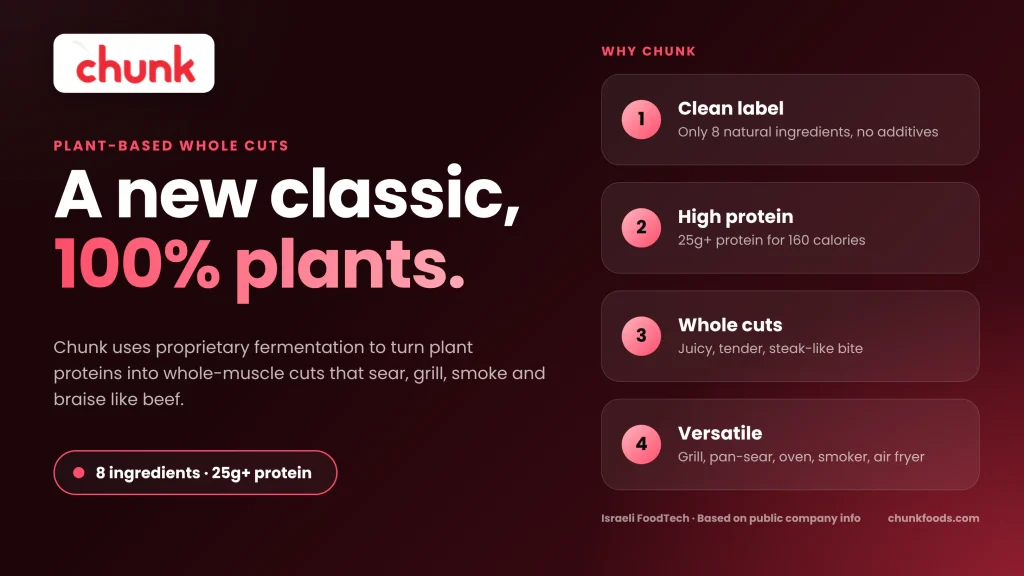
Chunk Foods is developing plant-based meat alternatives designed to provide the taste, texture and cooking experience of conventional meat. The company focuses on whole-cut products that can replace beef in different meals.
Unlike many plant-based meat products that are designed as burgers or minced meat, Chunk focuses on products that resemble traditional whole cuts. Its technology uses a proprietary fermentation process to transform plant proteins into meat-like textures.
The company's products can be grilled, pan-seared, smoked, baked and used in different recipes. This makes them suitable for restaurants, hotels, foodservice businesses and consumers looking for alternative protein options.
Website: https://www.chunkfoods.com/
4. Reeco

Reeco is a technology company helping hotels and hospitality businesses improve their purchasing and operational processes. Its platform focuses on the back-office operations of the hospitality industry, particularly food and beverage procurement, inventory management and supplier coordination.
Many hotels manage purchasing through spreadsheets, emails, invoices and separate supplier systems. These manual processes can create operational difficulties, increase costs and make it harder to monitor inventory.
Reeco addresses these challenges through a digital procurement platform that connects purchasing, receiving, inventory, culinary operations and accounts payable.
Website: https://www.reeco.com/
5. Torr FoodTech
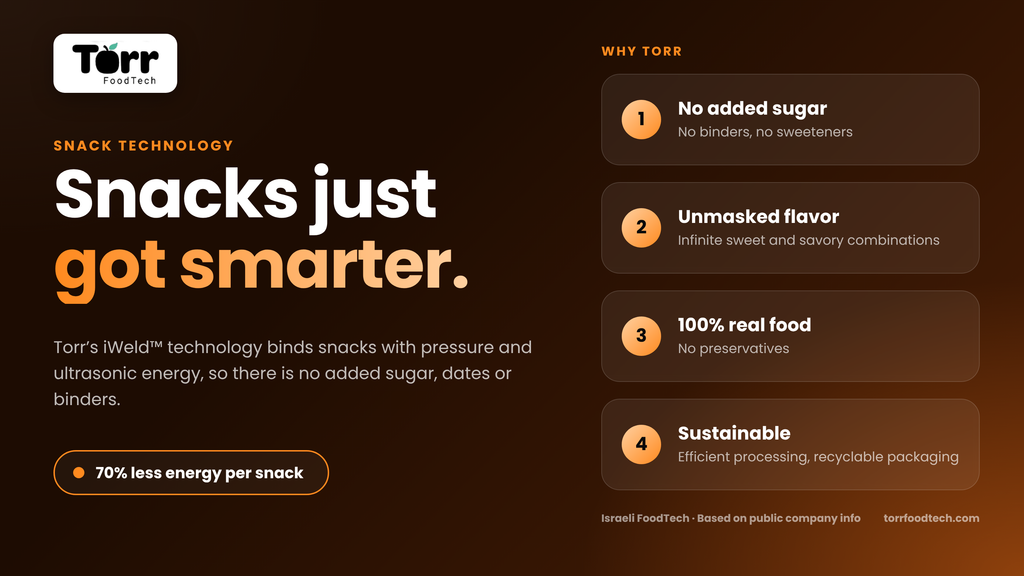
Torr FoodTech is developing technology to improve how snacks are manufactured. The company focuses on producing healthier snack products without relying on added sugar or traditional binding ingredients.
In conventional snack manufacturing, sugar, dates and other ingredients are often used to hold different components together. Torr aims to replace these materials with its proprietary iWeld technology.
The technology combines mechanical pressure with ultrasonic energy to bind food ingredients without requiring additional sugars or conventional binders.
This approach creates opportunities for manufacturers to develop different snack products, including bars, crackers, cookies and breakfast foods. Torr also highlights the use of natural ingredients, with an emphasis on taste, texture and nutritional value.
Website: https://torrfoodtech.com/
6. NewMoo Foods
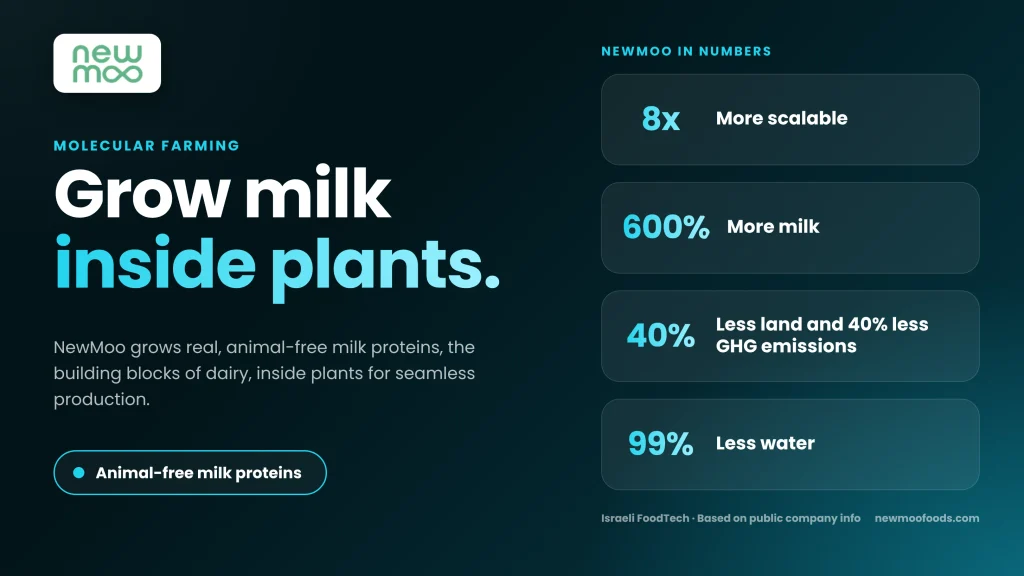
NewMoo Foods is developing animal-free milk proteins using plants. The company aims to create dairy ingredients that offer the functional properties of traditional milk proteins without requiring conventional dairy production.
Milk proteins play an important role in producing cheese and other dairy products because they influence texture, structure and performance. Replacing these proteins while maintaining the familiar characteristics of dairy products remains a major challenge for alternative dairy manufacturers.
NewMoo is addressing this challenge through plant molecular farming technology. Its approach uses plants as production systems for milk proteins, including casein, which is an important ingredient in cheese manufacturing.
7. Kayama Foods

Kayama Foods is developing healthier plant-based fats for the food industry. The company focuses on helping food manufacturers reduce saturated fat without compromising the taste, texture and performance of their products.
Fats are essential ingredients in many food products because they contribute to flavour, juiciness, texture and mouthfeel. However, replacing conventional fats with healthier alternatives can be difficult because the substitutes must maintain similar functional properties.
Kayama Foods is developing functional fats using natural, plant-based ingredients. Its technology is designed to transform healthier unsaturated oils, such as sunflower and canola oil, into functional fats that can be incorporated into food formulations.
8. Fabumin

Fabumin is developing a natural egg replacement ingredient using aquafaba, the water produced during the cooking and processing of legumes such as chickpeas.
Eggs are widely used in the food industry because of their binding, emulsifying and foaming properties. However, food manufacturers are increasingly exploring alternatives that can reduce dependence on conventional egg production.
Fabumin uses aquafaba, which is often treated as a waste product by legume processing companies, to create a functional ingredient for food manufacturing.
The company has developed a drying technology that converts liquid aquafaba into a powder that can be used as an egg substitute. This allows manufacturers to benefit from the functional properties of aquafaba while making transportation, storage and industrial applications more practical.
Website: https://www.fabumin.com/
9. Kiinns
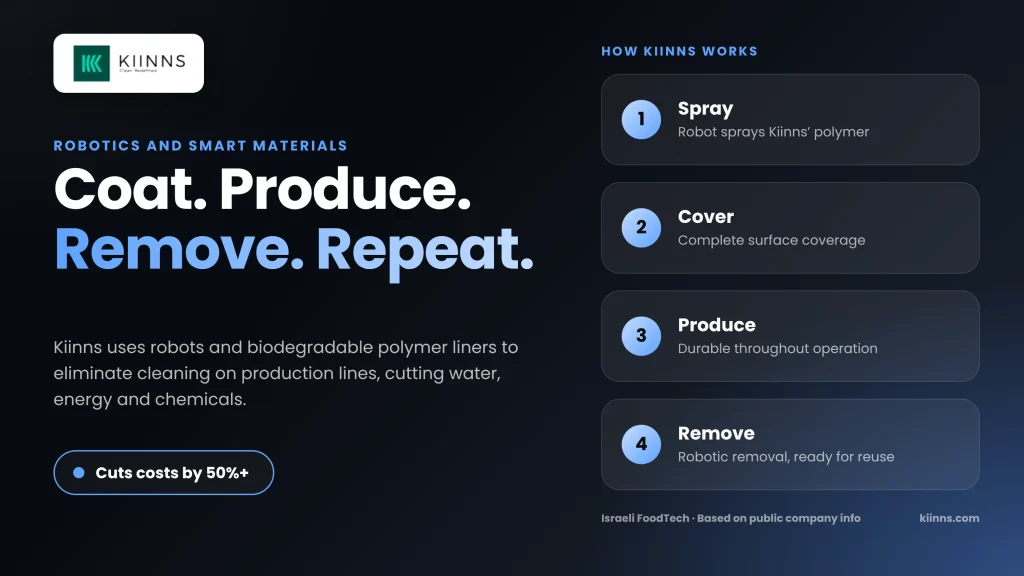
Kiinns is developing industrial technology to improve cleaning and efficiency in food production facilities. The company operates at the intersection of FoodTech, robotics and advanced materials.
Cleaning food production equipment is an important part of maintaining hygiene and preventing contamination. However, traditional cleaning processes can require significant amounts of water, energy and chemicals while creating downtime for manufacturing facilities.
Its technology applies a special polymer coating to production equipment surfaces. The coating acts as a protective layer that prevents direct contact between the equipment surface and processed food. Once production is complete, the material can be removed through a robotic process.
Website: https://www.kiinns.com/
10. Agwa Farm
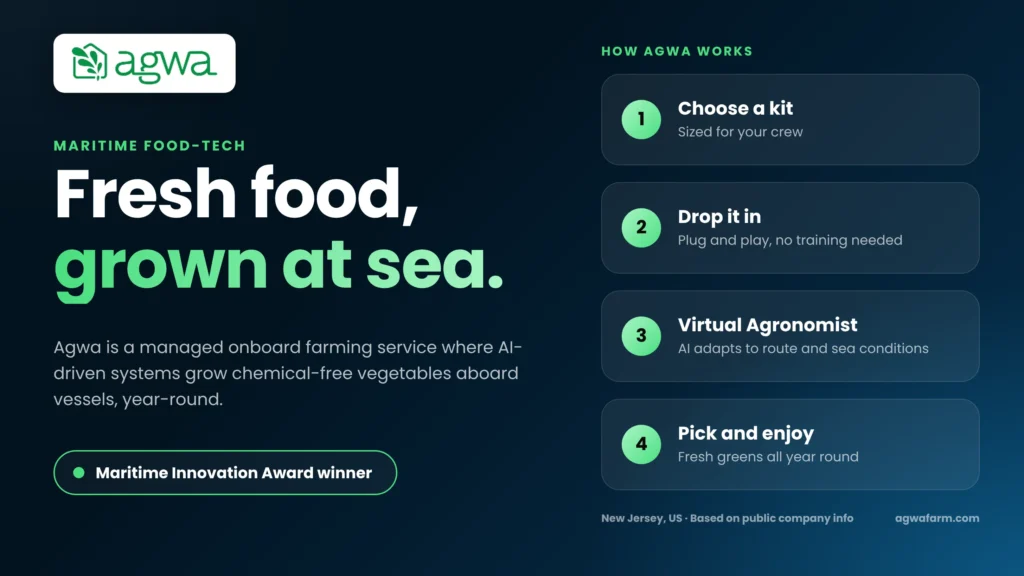
Agwa Farm is developing a fresh food service designed for the maritime industry. The company focuses on improving access to fresh vegetables and produce for crews working aboard ships.
Access to fresh food can be challenging for maritime operations because vessels travel across different routes and may spend extended periods away from ports. Traditional food supply systems can also depend on frozen products and irregular resupply schedules.
Agwa addresses this challenge through a managed onboard growing system that enables ships to produce fresh greens directly on vessels.
Its plug-and-play solution combines growing equipment with intelligent automation and remote monitoring. The company's Virtual Agronomist helps manage growing conditions and maintain a reliable supply of fresh produce.
Website: https://www.agwafarm.com/
Conclusion
Israel's FoodTech ecosystem demonstrates how technology can address different challenges across the global food industry. From cultivated meat and plant-based alternatives to functional ingredients, smart manufacturing and digital food services, these startups are exploring new ways to improve food production and distribution.
Companies such as Ever After Foods, Chunk Foods and NewMoo Foods are developing alternatives to conventional animal-based products, while Kayama Foods and Fabumin are working on functional ingredients for food manufacturers. Torr FoodTech and Kiinns are focusing on improving manufacturing processes, and HAAT Delivery, Reeco and Agwa Farm are addressing challenges in food distribution, hospitality operations and fresh food accessibility.
FAQs
1. What are the top Israeli FoodTech startups to watch in 2026?
Some notable Israeli FoodTech startups include HAAT Delivery, Ever After Foods, Chunk Foods, Reeco, Torr FoodTech, NewMoo Foods, Kayama Foods, Fabumin, Kiinns and Agwa Farm.
2. How are Israeli FoodTech startups transforming the food industry?
Israeli FoodTech startups are introducing innovations in cultivated meat, plant-based proteins, dairy alternatives, egg substitutes, food manufacturing and digital delivery services. These technologies aim to improve food production, efficiency and sustainability.
3. What technologies are Israeli FoodTech startups developing?
These startups are working on technologies such as cellular agriculture, plant molecular farming, fermentation, ultrasonic food processing, alternative food ingredients, robotics and automated food-growing systems.
4. Why is Israel becoming an important hub for FoodTech innovation?
Israel has a growing technology and research ecosystem, with expertise in biotechnology, agriculture, artificial intelligence and food science. These capabilities are helping startups develop innovative solutions to global food production and sustainability challenges.
Read Also - Top 10 Agritech Startups in Thailand to Watch in 2026
Recommended Stories for You

Yan lii Oct 16, 2026

Nguyen Minh Nov 9, 2026

Yan li Jan 30, 2025

Team SR Dec 29, 2025

Carmela Catilo Sep 29, 2026
Trending Stories

Ather Energy Shares Surge 2% on Strong Market Debut in India

Top 10 Strongest Currency in Asia 2025

Best Startup Industries In 2026

Hua Hong and SMIC Shares Drop Sharply Amid Rising U.S.-China Tensions

How Do Productivity and Infrastructure Support Economic Growth?

Hong Kong wants innovation and technology partnerships in Middle East
Top 10 EdTech Startups in the UAE to Watch in 2026

Info Edge Reports 36% Return on Startup Investments in India