

Emerging Sectors in the Digital Economy: Key Trends and Business Opportunities in 2026
Oct 19, 2026 | By Yan lii
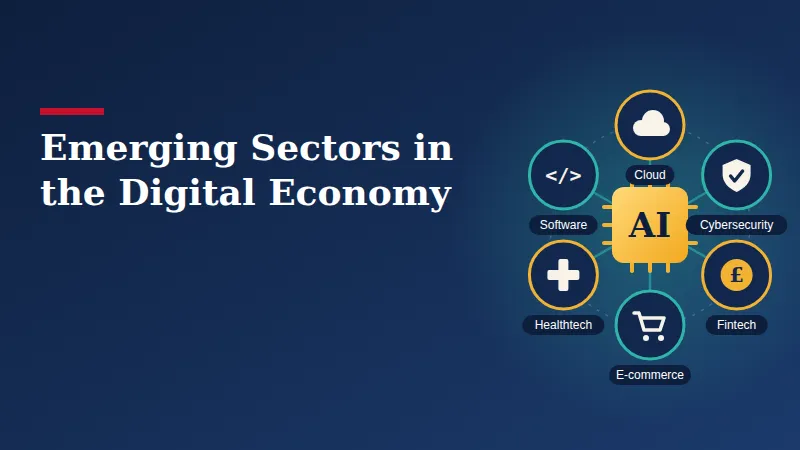
The digital economy is growing as businesses and consumers use technology in their daily activities. From online payments and e-commerce to artificial intelligence and cloud computing, digital tools are changing how companies operate and serve customers.
 Follow us
 Follow us
These changes are creating new opportunities for entrepreneurs, startups, and established businesses. Companies are investing in technology to improve productivity, reduce costs, reach more customers, and develop new products and services.
Understanding the emerging sectors in the digital economy can help business owners identify market opportunities and make better decisions. Below are the key sectors, their growth drivers, business opportunities, and challenges.
1. Artificial Intelligence and Automation
Artificial intelligence (AI) is one of the most important sectors in the digital economy. AI tools can analyse information, answer questions, generate content, and automate repetitive tasks.
RECOMMENDED FOR YOU



Businesses are using AI to improve customer service, support marketing, analyse sales data, and increase productivity. AI-powered chatbots and virtual assistants can also help companies respond to customers more quickly.
Key points:
- AI helps businesses automate repetitive tasks.
- AI tools support data analysis and decision-making.
- Startups can develop AI assistants, content tools, and automation software.
- Companies need to consider data privacy, accuracy, and responsible AI use.
Business opportunities: Entrepreneurs can build AI-powered software for customer support, marketing, recruitment, finance, and business operations.
2. Financial Technology (Fintech)
Fintech uses digital technology to make financial services more accessible and convenient. Mobile banking, digital payments, online lending, and financial management applications are common examples.
As consumers and businesses increasingly use online financial services, companies are developing faster ways to transfer money, manage expenses, and access financial products.
Key points:
- Digital payments make transactions more convenient.
- Financial apps help users manage money and expenses.
- Businesses can use digital platforms to process payments.
- Security and financial regulations remain important considerations.
Business opportunities: Startups can develop payment platforms, expense management tools, lending technology, and financial software for small businesses.
3. Cybersecurity and Data Protection
Cybersecurity is becoming increasingly important as businesses store more information online and depend on connected systems. Cyberattacks, fraud, and data breaches can cause financial losses and damage customer trust.
Companies are investing in tools that protect their networks, applications, and sensitive information. Small businesses also need affordable security solutions as they move their operations online.
Key points:
- Cybersecurity protects business systems and customer data.
- Companies need tools to detect threats and prevent fraud.
- Data protection is important for maintaining customer trust.
- Businesses must regularly review their security practices.
Business opportunities: Entrepreneurs can offer security monitoring, identity protection, fraud detection, and cybersecurity consulting services.
4. Cloud Computing and Software as a Service (SaaS)
Cloud computing allows businesses to store information and access computing resources over the internet. Software as a Service (SaaS) enables customers to use software online, often through a monthly or annual subscription.
These models help companies access digital tools without building and maintaining all their own technology infrastructure.
Key points:
- Cloud services support remote access and collaboration.
- SaaS products provide software through subscriptions.
- Businesses can scale services as their needs change.
- Data security, service reliability, and costs require careful management.
Business opportunities: Startups can develop project management software, accounting platforms, customer relationship management tools, and cloud-based business applications.
5. E-commerce and Digital Marketplaces
E-commerce allows businesses to sell products and services through websites, mobile applications, and online marketplaces. Digital shopping has created opportunities for established retailers, small businesses, and independent brands.
Companies are also using social media and online advertising to reach customers and promote their products.
Key points:
- Online stores help businesses reach customers beyond local markets.
- Digital marketplaces connect buyers and sellers.
- Social commerce supports product discovery and online sales.
- Delivery, returns, competition, and customer service remain important challenges.
Business opportunities: Entrepreneurs can launch online stores, build specialised marketplaces, provide e-commerce support, or develop tools for inventory and order management.
6. Healthtech and Digital Healthcare
Healthtech combines technology with healthcare services. Telemedicine, health applications, digital medical records, and remote patient monitoring are examples of this growing sector.
Digital healthcare tools can help patients connect with healthcare professionals and allow providers to manage information more efficiently.
Key points:
- Telemedicine enables remote consultations.
- Digital records help organise patient information.
- Remote monitoring supports the tracking of health measurements.
- Healthtech companies must protect sensitive data and meet relevant regulations.
Business opportunities: Startups can develop appointment booking platforms, healthcare management software, remote monitoring tools, and digital services for clinics.
7. Green Technology and Digital Sustainability
Green technology uses digital solutions to support energy efficiency and environmental sustainability. Businesses are exploring tools that help monitor energy use, manage renewable energy, and measure emissions.
Digital systems can provide information that helps companies identify waste and improve resource management.
Key points:
- Smart systems can help reduce unnecessary energy use.
- Digital tools support energy monitoring and reporting.
- Businesses are looking for ways to measure environmental performance.
- Solutions must demonstrate practical value and reliable results.
Business opportunities: Entrepreneurs can develop energy monitoring software, emissions tracking platforms, smart building systems, and tools for managing renewable energy.
8. Internet of Things (IoT) and Smart Technology
The Internet of Things (IoT) connects physical devices to the internet so they can collect and exchange information. Examples include smart home devices, industrial sensors, connected vehicles, and equipment monitoring systems.
Businesses can use IoT data to track performance, identify problems, and improve operations.
Key points:
- Connected devices collect useful operational data.
- Sensors can help monitor equipment and working conditions.
- Smart systems support automation in buildings and factories.
- Device security and compatibility are important challenges.
Business opportunities: Startups can develop smart home products, industrial monitoring tools, connected equipment, and technology for smart buildings.
9. Key Business Opportunities in the Digital Economy
The following table summarises the main sectors and the opportunities they offer.Sector Main Growth Driver Business Opportunities Artificial Intelligence Automation and productivity AI assistants and business automation Fintech Digital financial services Payments and financial management Cybersecurity Growing security requirements Security software and consulting Cloud Computing and SaaS Demand for flexible software Subscription-based applications E-commerce Online shopping Digital stores and marketplaces Healthtech Adoption of digital healthcare Telemedicine and healthcare software Green Technology Energy efficiency and sustainability Energy monitoring and emissions tracking IoT Connected devices Smart systems and equipment monitoring
10. Challenges in the Digital Economy
Although the digital economy offers significant opportunities, businesses must address several challenges before launching new products or services.
- Competition: Popular sectors may already have many established companies.
- Data privacy: Businesses must handle personal and commercial information responsibly.
- Cybersecurity: Digital services need appropriate protection against attacks and fraud.
- Technical skills: Companies need workers who can develop, manage, and maintain digital products.
- Changing technology: Businesses must keep their products relevant as customer needs and technology evolve.
- Customer trust: Reliable services, transparent policies, and good support can help businesses build lasting relationships.
Entrepreneurs should research their target customers, assess competitors, understand applicable regulations, and test their ideas before investing heavily.
Conclusion
The digital economy continues to create opportunities across artificial intelligence, fintech, cybersecurity, cloud computing, e-commerce, healthtech, green technology, and IoT.
Each sector addresses different customer needs, from improving business productivity to making financial services more convenient and supporting environmental goals.
For entrepreneurs, success depends on choosing a clear problem to solve, understanding customer demand, and developing a reliable solution. Businesses that combine useful technology with strong customer service and responsible data practices can build a stronger position in the changing digital marketplace.
FAQs
What are the main emerging sectors in the digital economy?
Which digital economy sectors offer opportunities for startups?
Why is AI important to the digital economy?
How does cybersecurity support digital business growth?
What skills are needed to work in the digital economy?
Recommended Stories for You

Team SR Dec 30, 2025


Nguyen Minh Dec 26, 2025

Startuprise Dec 27, 2025

Yan li May 13, 2025

Yan li Dec 30, 2025
Trending Stories

Top 10 Strongest Currency in Asia 2025

Best Startup Industries In 2026

What is a vision statement of a Company
China lifts ban on Boeing deliveries after Trump’s tariff deal

Ather Energy Shares Surge 2% on Strong Market Debut in India

Leading Asian Healthtech startups in 2026

Hua Hong and SMIC Shares Drop Sharply Amid Rising U.S.-China Tensions

Potato Corner Franchise in 2025 – Cost, Profit, Requirements, Review