

 Follow us
 Follow us
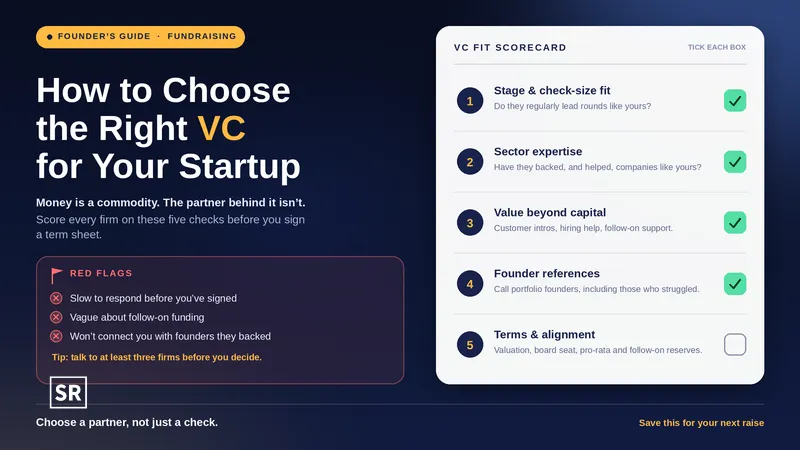
Choosing the right venture capital (VC) firm is an important decision for any startup founder. The right investor can offer more than money. They can share business knowledge, connect you with potential customers, help you hire talented people and guide your company as it grows.
However, not every VC firm is right for every startup. Some investors support new businesses, while others prefer companies that already have customers and steady revenue. Different investors also focus on different industries, funding amounts and business goals.
So, how do you choose the right VC for your startup? You need to understand your funding needs, research potential investors and find a partner who shares your vision.
1. Understand Your Startup's Funding Needs
Before contacting venture capital firms, decide how much money your startup needs and how you plan to use it.
A new startup may need funding to build its product, hire its first employees or test its business idea. A growing company may need money to reach new customers, enter new markets or improve its technology.
Prepare a simple funding plan that explains:
- How much funding you want to raise.
- How you will spend the money.
- How long the funding will support your business.
- What goals you plan to achieve with the investment.
- When you might need more funding.
Having a clear plan will help you find investors who can provide the amount of money your business needs.
2. Choose a VC That Understands Your Industry
Venture capital firms often focus on specific industries. Some invest in artificial intelligence, fintech, healthcare, climate technology or software, while others support startups across several sectors.
Look for investors who understand your market and the challenges your business may face.
For example, an AI startup may benefit from an investor who understands technology and can introduce it to potential customers. A healthcare startup may need an investor with experience in healthcare businesses, medical research and industry regulations.
Check the firm's website and portfolio to learn about the companies it has supported. Look for businesses that operate in a similar industry or have a business model like yours.
An investor with industry experience can offer useful advice, introduce you to the right people and help you avoid common mistakes.
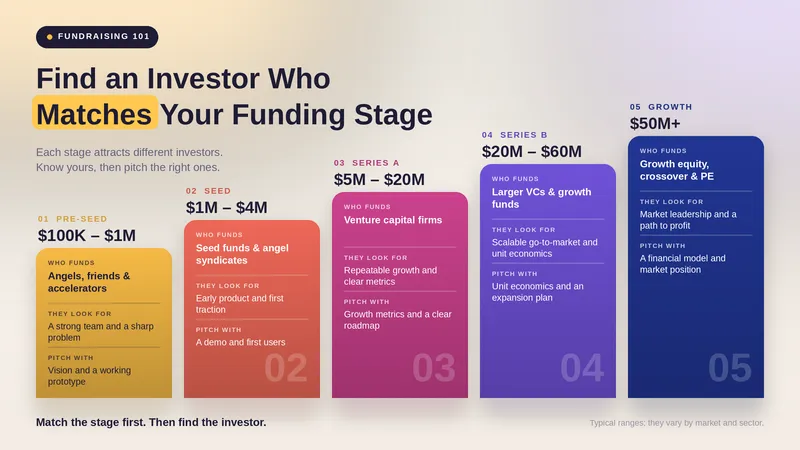
3. Find an Investor Who Matches Your Funding Stage
RECOMMENDED FOR YOU



VC firms usually invest at different stages of a startup's growth. Before approaching an investor, make sure the firm supports businesses at your current stage.
Here are the main funding stages:
- Pre-seed funding: Helps founders develop an idea, build an early product or test whether the business concept can work.
- Seed funding: Helps startups develop their products, find customers and test market demand.
- Series A funding: Supports startups that have shown market demand and want to build a stronger business model.
- Series B and later rounds: Help established startups grow faster, enter new markets and expand their operations.
These stages can vary depending on the investor and the startup.
Before pitching, check the firm's previous investments and funding criteria. This will help you avoid spending time approaching investors who do not usually invest in companies at your stage.
4. Look for Benefits Beyond Funding
Money is important, but a good VC can also help your business grow in other ways.
Some investors help startups hire experienced employees, find new customers, connect with future investors and expand into international markets. Others provide advice on sales, product development, marketing and business strategy.
Think about what your startup needs most over the next few years.
For example, if you want to enter a new country, an investor with strong business connections in that market could be helpful. If your company needs senior managers, look for a VC with experience in hiring and building teams.
Ask potential investors how they support their portfolio companies after making an investment. Try to understand what practical help they can offer instead of relying only on general promises.
5. Check the VC Firm's Reputation
Before accepting funding, learn about the investor's history and how it works with founders.
Look at the firm's previous investments, successful exits and follow-on funding. Also, check whether it has supported its portfolio companies during difficult periods.
One of the best ways to understand an investor is to speak with founders who have already worked with the firm.
Ask questions such as:
- Is the investor available when the company needs advice?
- Does the firm provide useful business connections?
- How does it handle disagreements?
- Does it support founders when the business faces problems?
- Does it keep its promises?
A VC firm's reputation is not only about how much money it has invested or how many successful companies it has backed. The way it treats founders and supports businesses also matters.
6. Understand Valuation, Equity and Investment Terms
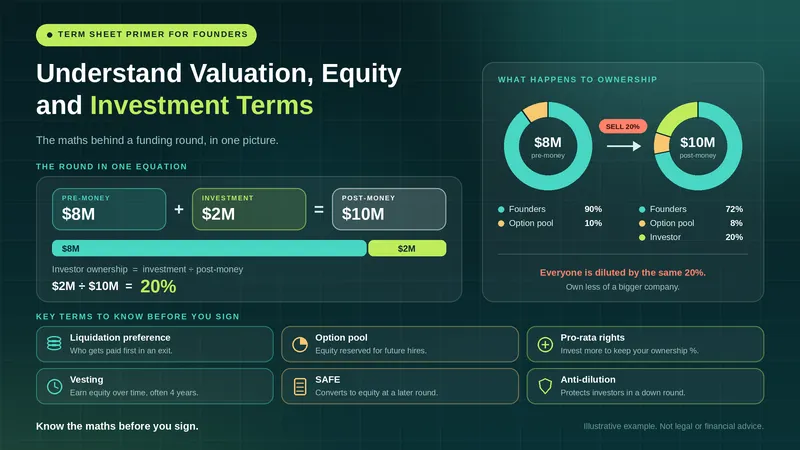
When comparing investment offers, do not focus only on how much money an investor is offering or how much your startup will be valued at.
The terms of an investment can affect your ownership, control over business decisions and ability to raise money in the future.
Here are some important points to understand:
Company valuation: This is the estimated value of your startup when the investment is made. A higher valuation may allow you to give away less ownership for the same investment, but an unrealistic valuation can make future fundraising more difficult.
Equity dilution: This means giving investors a share of your company in exchange for funding. Understand how much ownership you and other existing shareholders will give up.
Board seats: Some investors may request a position on your company's board. Understand what this means for business decisions and control.
Liquidation preferences: These terms determine how investors and other shareholders may receive money if the company is sold or closed.
Investor rights: Review conditions related to company information, future fundraising, major decisions and protection against certain changes in share value.
Always read the investment agreement carefully and consult a qualified startup lawyer before signing. An offer with a slightly lower valuation may be better if it comes with fair terms and a supportive investor.
7. Make Sure Your Long-Term Goals Match
Your relationship with a VC may continue for several years, so it is important to have similar expectations.
Some investors want startups to grow quickly and aim for an acquisition or stock market listing. Others may support a longer growth period, depending on their investment strategy.
Before accepting an offer, discuss your plans for the company.
Do you want to build a profitable business, expand internationally or prepare for a future sale? Does the investor support your approach? What happens if growth takes longer than expected?
You should also discuss how disagreements will be handled and how much independence you will have when making business decisions.
Having these conversations early can help prevent problems later.
Read Also- How to Start a Tech Repair Business: A Simple Guide
8. Research the VC Before Sending Your Pitch
Sending the same pitch to many investors is not always the best approach. It is better to contact firms that are a good match for your business.
Create a list of potential investors based on their industry focus, funding stage, investment size, location and previous deals.
Visit their websites and read their investment announcements. Research the partners who lead investments and identify the person most likely to understand your business.
Your pitch deck should clearly explain:
- The problem your startup solves.
- Your product or service.
- Your target customers and market.
- Your business model and revenue.
- Your current progress and achievements.
- Your competitive advantage.
- How much funding you need and how you will use it.
Explain why you believe the investor is a good fit for your company. You can also ask other founders, business contacts or startup accelerators for introductions.
9. Compare Investment Offers Before Deciding
If several VC firms are interested in your startup, take the time to compare their offers carefully.
Look at the funding amount, company valuation, equity dilution, investment terms and additional support each firm can provide. Consider the investor's reputation, industry knowledge and ability to help your business grow.
Pay attention to how investors communicate during the fundraising process. Clear communication, honest discussions and realistic timelines can help you understand what working with them may be like.
Do not rush into an agreement simply because an investor offers money quickly. Choose the offer that best supports your business goals and gives your startup a strong foundation for future growth.
Conclusion
Choosing the right VC is about finding an investor who understands your business and can support its growth over the long term. Funding is important, but industry experience, business connections, fair investment terms and a good working relationship also matter.
Start by understanding your funding needs, researching suitable investors and speaking with founders who have worked with them. Compare offers carefully and seek legal advice before signing any agreement.
Remember, the best VC is not always the one offering the highest valuation. It is the investor who brings the right mix of money, knowledge, connections and support to help your startup build a successful and sustainable business.
FAQs
How do I choose the right VC for my startup?
What should founders look for in a venture capital firm?
Should startups choose a VC based only on valuation?
When should a startup approach VC firms?
Recommended Stories for You

Nguyen Minh Dec 24, 2025

Nguyen Minh Dec 23, 2025

Startuprise Dec 24, 2025

Yan li Dec 30, 2025

Yan li Jan 28, 2025

Nguyen Minh Sep 17, 2026
Trending Stories
AI in Manufacturing: Use Cases, Benefits and Business Impact

Top 10 Strongest Currency in Asia 2025

Best Startup Industries In 2026

What is a vision statement of a Company
China lifts ban on Boeing deliveries after Trump’s tariff deal

Ather Energy Shares Surge 2% on Strong Market Debut in India

Potato Corner Franchise in 2025 – Cost, Profit, Requirements, Review

Hua Hong and SMIC Shares Drop Sharply Amid Rising U.S.-China Tensions