


 Follow us
 Follow us
Japan isn't the closed, red-tape-heavy market it used to be marketed as. It's still bureaucratic, sure — this is a country that requires a physical seal to open a bank account — but the door for foreign founders has genuinely widened. The catch? The rules changed hard in late 2025, and most articles floating around still quote the old numbers.
So here's the version that matches what's actually in effect right now: what it costs, how long it takes, which visa to chase first, and what immigration officers are actually checking on your application.
Why Expand into Japan in 2026?
Japan pairs a massive, high-spending consumer base with a startup-friendly visa reset that's finally rewarding entrepreneurs who show up prepared.
A few reasons founders keep circling back to Japan:
- Scale. It's still the world's third-largest economy by nominal GDP, with a population north of 125 million and some of the highest per-capita spending power in Asia.
- Stability. Contract enforcement, IP protection, and banking infrastructure are all mature. You're not gambling on rule-of-law risk the way you might elsewhere in the region.
- 100% foreign ownership is fully legal. There's no requirement for a local partner or majority Japanese shareholder under the Companies Act — you can own your Japanese company outright.
- A widening visa net. The Startup Visa program went nationwide in January 2025 and now runs in dozens of municipalities, not just a handful of special zones. Tokyo, Fukuoka, Osaka, and cities as far apart as Sapporo and Okinawa all run their own local versions.
- A market hungry for outside ideas, particularly in fintech, SaaS, inbound tourism tech, eldercare tech, and English-language services — sectors where Japan's domestic talent pool is thinner than demand.
The trade-off is capital. Japan tightened the Business Manager Visa considerably in October 2025, which means the "just show up and figure it out" era is over. What replaced it is a two-stage path that actually makes more sense for most early founders — more on that below.
Understanding the Startup Visa Program Japan
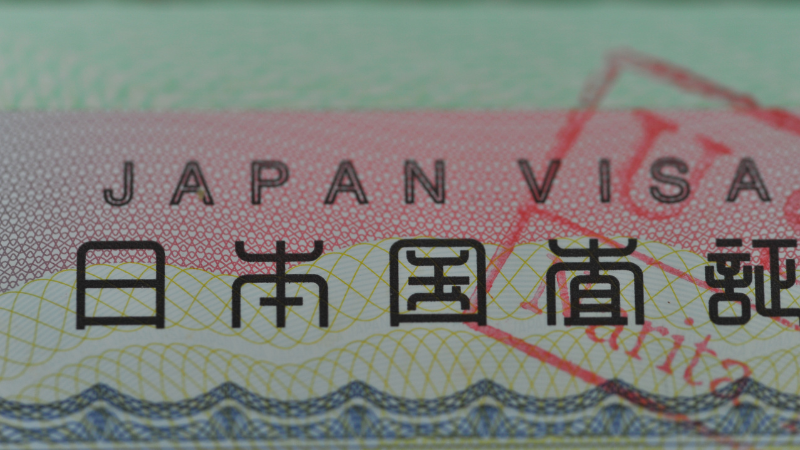
The Startup Visa is a temporary residence status — officially the "Program to Promote Startup Businesses by Foreign Nationals" — that lets you live in Japan for up to two years to build a business before you're required to meet the tougher Business Manager Visa thresholds.
Think of it as scaffolding, not a permanent structure. Under the old system, you needed capital, an office, and staff in place before you could even move to Japan. The Startup Visa flips that: you get legal residency first, and the "prove you're a real business" requirements come later, once you've had time to raise money, find an office, and build local relationships.
During this window you can:
- Legally live in Japan while researching your market and network
- Open bank accounts, sign leases, and negotiate supplier contracts as a resident, not a tourist
- Incorporate a Kabushiki Kaisha (KK) or Godo Kaisha (GK) and start operating
- Pitch Japanese investors, apply for government-backed grants, and build the funding runway needed to hit the ¥30 million threshold for the next visa stage
It is not, however, a stand-alone work visa in the way most people imagine. It's explicitly a bridge — the goal from day one is transitioning into the Business Manager Visa (or another qualifying status) before it expires.
How to Get Start Up Visa in Japan: How to Apply
You apply through a certified local government program (not directly through immigration), get your business plan approved by that municipality first, then convert that approval into a Certificate of Eligibility with the Immigration Services Agency.
Here's the sequence in practice:
- Pick your municipality. Since the nationwide expansion, most prefectures and major cities run an approved "Foreign Entrepreneurship Support" program. Your choice should match your industry — Tokyo and Fukuoka remain the most active hubs, but regional cities often offer more hands-on mentorship for a smaller applicant pool.
- Draft your Business Startup Preparation Activity Plan. This is the core document. It needs a clear problem statement, what makes your solution different, a realistic implementation timeline, market and competitor analysis, and financial projections — including how you intend to fund the business toward the eventual ¥30 million capital mark.
- Submit to the local certified support organization. An internal committee reviews the plan. If it's approved, the municipality issues a Certificate of Confirmation of Startup Activity (in Tokyo, this involves a small ¥300 revenue-stamp fee). This certificate is typically valid for around three months, so don't sit on it.
- Apply for your Certificate of Eligibility (COE) or a status change. Applying from outside Japan, you'll go through the COE route via a sponsor or the local program; applying from inside Japan on another visa (say, a Digital Nomad or student visa), you file for a change of status.
- Exchange the COE for your visa at a Japanese embassy or consulate in your home country, then enter Japan and complete residence registration.
A well-built plan is the entire game here. Immigration and municipal reviewers want specificity — not "I'll disrupt the fintech space," but a defined customer, a defined market size, and a defined 12–24 month roadmap.
Read Also : How to Start an E-Commerce Business in Singapore: A Complete Guide
Requirements for the Japan Startup Visa
You need an approved business plan, proof of sufficient living and startup funds, and — depending on the zone — a local mentor or certified support organization backing your application. There's no fixed capital minimum at this stage.
The exact checklist varies slightly by municipality, but across most programs you'll be asked to show:
- A detailed, reviewed business plan (the core requirement — weak plans are the number one rejection reason)
- Sufficient personal savings to cover living expenses and early business costs during the preparation period
- A clean immigration and criminal record
- Endorsement or acceptance from the local certified support organization running the program in your chosen city
- In some zones, a defined business location or intent to establish one (co-working space is generally fine at this stage)
Unlike the Business Manager Visa, you generally don't need to already have an office, employees, or the full capital in hand — that's the entire point of this visa. What you do need is evidence that you understand the market and have a believable path to raising what you'll need next.
Read Also - Top AI Startups in Singapore 2026: Companies Shaping the AI Future
How Much Does a Japan Startup Visa Cost?
The visa application itself is inexpensive — often just administrative fees in the low hundreds of yen — but budget for real living and setup costs during your preparation period, since this is not a fully funded program.
Rough cost buckets to plan around:
| Item | Typical Range |
|---|---|
| Municipal application/certification fee | Often nominal (e.g., ~¥300 in Tokyo) |
| Living expenses (rent, food, insurance) for the visa period | Varies heavily by city — Tokyo runs highest |
| Co-working space / temporary office | From roughly ¥20,000–¥60,000/month |
| Company incorporation later (KK or GK) | ¥100,000–¥250,000+ depending on entity type |
| Professional help (immigration lawyer, gyoseishoshi, accountant) | Optional but common — costs vary by scope |
The visa fee itself is the cheap part. The real cost is surviving in Japan for up to two years without guaranteed income while you build toward the funding you'll need for the next stage — which is exactly why lenders like the Japan Finance Corporation and local startup grants matter so much during this window.
Japan Startup Visa Processing Time for Approval
Municipal review typically takes several weeks, and the subsequent Certificate of Eligibility or status-change process through immigration can add one to three months on top — so plan for roughly two to four months total, longer if your plan needs revisions.
A realistic timeline breakdown:
- Business plan review by the municipality: Often 3–8 weeks, depending on how active the local program is and how many revision rounds your plan needs
- Certificate of Confirmation issuance: Fast once approved, but remember it usually expires in about three months — so move to the immigration step promptly
- COE processing (Immigration Services Agency): Commonly runs one to three months depending on season and caseload
- Visa stamping at the embassy: Usually a matter of days to a couple of weeks once the COE is in hand
Build in buffer. Incomplete documentation is the single biggest cause of delay, and immigration will not hesitate to ask for supplementary paperwork if your financial evidence or business plan looks thin.
Read Also - MrBeast Business Empire
How Long is the Japan Startup Visa Valid?
Up to two years under the current, expanded program — a doubling from the original six-month-to-one-year terms offered before the 2025 reforms.
Some municipalities still issue shorter initial terms (six months to a year) with the option to extend, while others grant the full two years upfront. Either way, the clock is meant to be used, not run down passively — reviewers expect to see active progress (incorporation, fundraising, hiring plans) at any renewal or transition checkpoint. If you reach the deadline without meeting the requirements for a longer-term status, you generally cannot simply renew the Startup Visa indefinitely.
Where Can You Apply? Startup Visa Japan Locations
Since January 2025, the program runs nationwide — you're no longer limited to Tokyo and Fukuoka, though those two remain the largest and most established hubs.
Cities and prefectures currently operating certified Foreign Entrepreneurship Support programs include (non-exhaustive):
- Tokyo — the largest program, strongest investor density, highest cost of living
- Fukuoka — one of the original pioneer zones, known for a genuinely startup-friendly city government
- Osaka / Kansai region — strong for manufacturing, retail, and consumer brands
- Kobe — active fintech and biotech-adjacent programs
- Sapporo, Okinawa, and a growing list of regional cities — smaller applicant pools, often more hands-on mentorship, and lower living costs
Choose based on industry fit and where you can realistically build a local network, not just brand recognition. A fintech founder pitching Tokyo VCs has different needs than an inbound-tourism startup that's better served being based in Osaka or Okinawa.
How Foreign Entrepreneurs Can Raise ¥30 Million
Most founders reach ¥30 million through a blend of personal savings, JFC (Japan Finance Corporation) loans, local investor pitches, and — for sole proprietors — a broader "capital equivalent" calculation that counts office and operating costs, not just cash in the bank.
Realistic funding paths worth combining:
- Personal capital contribution. The most straightforward route, but ¥30 million (roughly USD 190,000–200,000 depending on the exchange rate) is a serious bar for a solo founder to clear alone.
- Japan Finance Corporation (JFC) loans. JFC runs financing programs specifically aimed at foreign entrepreneurs and small businesses — a common and government-endorsed way to top up capital.
- Local angel and VC investment. Tokyo and Fukuoka both have increasingly active early-stage investor communities that specifically watch the startup-visa pipeline for deal flow.
- Municipal grants and mentorship programs. Several of the certified support organizations connect founders to local grant funding, which — while rarely covering the full ¥30 million alone — reduces how much you need to raise elsewhere.
- The sole proprietor route. If a corporate structure isn't essential to your business model, structuring as an individual business (個人事業主) lets immigration calculate your "capital equivalent" as office deposit + roughly six months of wages + equipment costs combined — often a meaningfully lower real number than ¥30 million in pure cash.
Whichever mix you choose, document everything. Every yen needs a traceable source — undocumented "gifts" or vague cash deposits are a fast way to get a capital claim rejected outright.
Develop a Plan to Enter the Japanese Market
A visa gets you into the country. A market-entry plan gets you a business that survives past year one. Before you file any paperwork, work through:
- Market validation. Who is your Japanese customer, specifically? Japan's consumer behavior, B2B sales cycles, and trust-building norms differ meaningfully from Western or even other Asian markets — assumption-based planning fails fast here.
- Localization, not translation. Product UX, marketing tone, customer support hours, and even your pricing structure often need real adaptation, not a straight language swap.
- Distribution and partnership strategy. Many successful foreign entrants use a local partner, distributor, or reseller for the first 12–18 months rather than building a direct sales team from scratch.
- Regulatory scan by industry. Fintech, healthcare, real estate, food service, and staffing all carry sector-specific licensing on top of general company registration — confirm these early, since they affect your timeline and budget.
- Financial runway planning. Map your Startup Visa period, your capital-raising milestones, and your Business Manager Visa transition deadline onto one calendar so nothing sneaks up on you.
- Local hiring strategy. Since a qualifying full-time employee is now mandatory for the Business Manager Visa, build your hiring plan (recruiting, salary benchmarking, contract terms) well before you need to submit that evidence.
Model Case Commentary: Business Setup
Picture a European fintech founder targeting Japan's remittance market. Under the current framework, a realistic path looks like this:
She applies through Tokyo's certified startup program with a business plan specific to a niche — say, remittance services for Japan's growing Southeast Asian resident population. The plan gets approved; she receives a Startup Visa and relocates, working from a co-working space in the early months.
Over the first nine months, she incorporates a Godo Kaisha (cheaper and faster than a KK for an early-stage entity), opens a corporate bank account, and starts pitching Japanese investors alongside applying for a JFC loan. By month nine, combined investor funding and the JFC loan bring her registered capital to ¥30 million. She signs a proper commercial office lease and hires a Japanese-national customer support lead — satisfying both the office and qualifying-employee requirements in one hire.
With her business plan reviewed by a certified tax accountant, her capital fully documented, and her employee in place, she files for the Business Manager Visa transition roughly ten months into her Startup Visa period — well before its two-year expiry, leaving buffer for processing delays.
This is the shape most successful transitions take: incorporate early, raise aggressively from month one, and treat the qualifying employee hire as a strategic priority rather than an afterthought.
Laws and Regulations on Setting Up Business in Japan

RECOMMENDED FOR YOU



Foreigners can own 100% of a Japanese company — there's no local shareholder requirement under the Companies Act. The two common structures:
- Kabushiki Kaisha (KK) — Japan's equivalent of a corporation. More expensive to set up (registration and notarization costs run meaningfully higher than a GK), but it carries more credibility with Japanese banks, landlords, and B2B clients, and is the structure expected if you plan to raise outside capital or eventually go public.
- Godo Kaisha (GK) — Japan's LLC equivalent. Cheaper and faster to register, increasingly common (Amazon Japan, Apple Japan, and Google Japan all operate as GKs), and generally the right call for solo founders or small consulting operations.
Registration process. Both entity types register with the Legal Affairs Bureau (法務局) and require Articles of Incorporation (定款) in Japanese — notarized at a Japanese notary public office for a KK. You'll also need a registered company seal (代表印), which functions as your legal signature for corporate documents in Japan.
Tax and compliance obligations. Once incorporated, expect ongoing obligations around corporate tax filing, consumption tax (Japan's VAT equivalent) once revenue thresholds are crossed, social insurance and pension enrollment for employees, and annual financial statement filing. Immigration explicitly checks tax and pension compliance during visa renewals — arrears in either can lead to refusal.
Industry-specific licensing. Certain sectors — real estate brokerage, financial services, food and beverage, staffing agencies, and healthcare among them — require additional licenses on top of standard company registration. Confirm sector-specific rules before finalizing your business plan, since they affect both your timeline and your visa application's documentation.
Employment law basics. If hiring locally, Japan's labor law leans protective of employees — written contracts, clear working hours, and social insurance enrollment aren't optional. Since a qualifying employee is now central to the Business Manager Visa, get employment contracts right from the start rather than treating them as a formality.
Documents Required to Submit to Authorities
While exact requirements vary by municipality and by which visa stage you're at, a consolidated document checklist for the full journey typically includes:
For the Startup Visa application:
- Business Startup Preparation Activity Plan (detailed, with market analysis and financial projections)
- Passport and current visa status (if applying from inside Japan)
- Proof of sufficient personal savings/funds for the preparation period
- Criminal background clearance (as required by the municipality)
- Application forms specific to the local certified support program
- Certificate of Confirmation of Startup Activity (issued after municipal approval, used to apply for the COE or status change)
For company incorporation (KK or GK):
- Articles of Incorporation (定款), notarized for a KK
- Company seal (代表印), registered with the Legal Affairs Bureau
- Personal seal certificates (印鑑証明書) for each incorporator and director
- Proof of capital deposit
- Registered office address documentation
For the Business Manager Visa transition:
- Capital evidence: bank certificates, remittance records, and full contribution documentation totaling ¥30 million
- Company registration certificate (登記事項証明書, Certificate of Registered Matters)
- Office lease agreement plus interior/exterior photos
- Qualifying employee's employment contract, residence card copy, and social insurance enrollment proof
- Japanese language proficiency certificate (JLPT N2 or equivalent) for the applicant or qualifying employee
- Degree certificates or documented proof of three-plus years of management experience
- Business plan with formal review/sign-off from a certified SME consultant, tax accountant, or CPA
- Most recent company tax returns (for renewals) or projected financial statements (for new entities)
- Certificate of Eligibility application or status-change application form
Keep digital and physical copies of everything — Japanese bureaucracy still runs heavily on original stamped documents, and immigration frequently requests supplementary evidence mid-review.
Conclusion
Japan's startup pathway in 2026 isn't harder to access — it's just more honest about what's required. The Startup Visa gives founders real breathing room: up to two years to test the market, build local relationships, and raise capital before the strict Business Manager Visa thresholds kick in. That's a meaningfully better deal than the old system, where you had to arrive fully capitalized and staffed on day one.
The trade-off is that the finish line moved. A ¥30 million capital requirement, a mandatory local hire, and language proficiency aren't boxes you check at the last minute — they're milestones that need to shape your plan from the moment you file your first application. Founders who treat the Startup Visa period as an active fundraising and hiring sprint, not a grace period, are the ones who make it to the Business Manager Visa without a scramble.
If you're serious about Japan, the move now is straightforward: pick your city, build a business plan specific enough to survive scrutiny, and start the capital conversation on day one — not month eighteen.
Can foreigners own 100% of a company in Japan?
Do I need to speak Japanese to start a business in Japan?
What's the difference between the Startup Visa and the Business Manager Visa?
Can I apply for the Japan Startup Visa from abroad?
Is ¥30 million really required to start any business in Japan?
How long does it take to register a company in Japan?
Which is better for a foreign founder: KK or GK?
What happens if my Startup Visa expires before I meet the Business Manager Visa requirements?
Can I run my Japan business remotely from outside Japan?
Does permanent residency become possible after the Business Manager Visa?
Recommended Stories for You

Yan li Oct 4, 2025

Nguyen Minh Jun 22, 2026

Yan li Jan 17, 2026

Yan li Mar 30, 2026

Yan li Aug 27, 2025

Trending Stories

Franchise business in Vietnam 2025

How to Start an E-Commerce Business in Singapore: A Complete Guide

Motherhood Malaysia’s – Leading Parenting & E-commerce Platform

New Software Wuvdbugflox Overview: A Modern Tool for Smarter Workflows and Productivity

5 Best MBA Programs for Tech Jobs

How to Calculate Overtime Pay in Malaysia: A Step-by-Step Guide

Autohome Aims to Revolutionize Car Buying Worldwide with AI

Shaping the UAE’s Future Economy: A Global Startup Magnet Drawing the Next Wave of Indian Talent