


These days, businesses get data from practically everywhere. Sales figures, customer data, website activity, marketing outcomes, financial figures, and many other things need to be monitored.
 Follow us
 Follow us
The issue is that large amounts of data do not always translate into usable information.
It still needs to be explained by someone.
Business intelligence (BI) tools can help with it. They transform complex company data into more comprehensible dashboards, reports, infographics, and insights. Teams can have a better understanding of the situation and make decisions based on factual data rather than spending hours poring over spreadsheets.
RECOMMENDED FOR YOU



In 2026, a variety of BI platforms will be available, and not all of them will target the same kind of business. While some are simpler for smaller teams, others are intended for large organisations. While some prioritise AI, natural-language queries, or embedded analytics, others place a greater emphasis on visual reporting.
Here, we will see the top 10 Business Intelligence tools in 2026
1. SAP Analytics Cloud
SAP Analytics Cloud is a strong option for organisations that already rely on SAP products.
The platform unifies planning, predictive analytics, and business intelligence in one location. Teams may create dashboards, investigate business performance, visualise data, and find valuable insights with AI-assisted features.
Its integration with the larger SAP ecosystem is one of its greatest benefits. This can greatly simplify adoption for businesses that currently use SAP apps and data sources.
It is mainly suited to larger organisations with more complex analytics requirements.
2. Strategy
Dashboards, analytics, and comprehensive reporting are the main features of Strategy, a corporate BI platform that was originally known as MicroStrategy.
It allows customers to access analytics from desktop and mobile devices and connects to many data sources. Another aspect of the platform's appeal is its HyperIntelligence features.
Strategy is powerful, but it is not necessarily the easiest option for beginners. Businesses usually need technical expertise to get the most from it.
For larger organisations with experienced data teams, that may not be a major concern.
3. SAS Visual Analytics
It’s beyond simple business reporting; SAS Visual Analytics is a component of the SAS Viya platform.
It integrates more sophisticated analytics and prediction capabilities with dashboards and visualisation. Because of this, it is helpful for businesses who wish to analyse their data more thoroughly rather than just monitoring common KPIs.
Without only depending on conventional data analysis techniques, users can investigate datasets, identify trends, and create reports.
For companies where advanced analytics are crucial to decision-making, it is an especially intriguing option.
4. Yellowfin BI
Yellowfin has taken a somewhat different approach by fusing teamwork, analytics, and embedded BI.
The platform provides tools for dashboard development and data visualisation, and its low-code and no-code features make it easier for teams to generate and alter analytics without having to start from scratch.
However, it offers cross-device access, which is best for teams that must work with corporate data away from their desks.
Yellowfin may be a suitable option for businesses looking for flexible analytics without heavily depending on technical personnel.
5. Qlik Cloud Analytics
Businesses that wish to do more than just see pre-made reports are the target audience for Qlik Cloud Analytics.
In addition to dashboards, self-service analysis, and AI-assisted insights, the platform's associative analytics engine aids users in navigating data from various perspectives.
Flexibility is an additional advantage. In addition to supporting cloud-based analytics, Qlik provides choices for businesses who require greater control over the deployment of their systems.
Because of this, companies with various infrastructure and data needs find it intriguing.
6. Zoho Analytics
One of the more approachable choices on this list, especially for small and medium-sized enterprises, is Zoho Analytics.
Data analysis and self-service reporting are the foundation of the platform. With capabilities like scheduled data syncing, data blending, and collaborative commenting, it can combine data from several sources.
You do not necessarily need a large data team to use it effectively.
For smaller organisations that want useful reporting without taking on an overly complicated enterprise platform, Zoho Analytics can make a lot of sense.
7. Sisense
Instead of only utilising BI as an internal reporting tool, Sisense strongly emphasises embedded analytics. This suggests that businesses can incorporate data and insights into their own processes, programs, or goods.
Dashboards, data modelling, self-service analytics, and AI-assisted insights are all included in the platform. Additionally, it provides developer-focused, low-code, and no-code choices.
Sisense is worth a closer look for a business that wants clients or staff to engage with analytics within an already-existing application.
8. Microsoft Power BI
Microsoft Power BI is one of the best-known names in business intelligence, and there is a simple reason for that.
Businesses can use it to create interactive dashboards and reports with relative ease. Additionally, it integrates particularly effectively with other Microsoft products, which can be a significant benefit for businesses that currently use the Microsoft ecosystem.
Teams can monitor performance without having to manually create fresh reports all the time thanks to Power BI's support for data visualisation and real-time reporting.
Because of its widespread use, organisations may typically locate a large number of individuals who are already proficient with the platform.
9. Google Looker
Google Looker was designed with enterprise analytics in mind.
Its regulated semantic modelling layer, which assists businesses in developing uniform definitions for crucial business KPIs, is one of its main characteristics. When many teams use the same data but interpret the numbers differently, that becomes important.
Looker also supports dashboards, data exploration, reporting, embedded analytics, and AI-assisted insights.
Its close connection with Google Cloud makes it particularly attractive to organisations already working with services such as BigQuery.
10. ThoughtSpot
ThoughtSpot is unique in that it emphasises making analytics feel more like a question than a report.
Natural-language and conversational analytics enable users to engage with data, enabling them to explore information without solely relying on pre-made dashboards.
Additionally, ThoughtSpot enables integrated analytics, allowing businesses to incorporate these experiences directly into their own workflows and products.
Its conversational approach may be enticing to companies that want more employees to work with data throughout the organization.
How to Choose the Right BI Tool
Choosing a business intelligence platform involves more than just looking for the one with the most features.
Think about what your business actually requires.
A business that already uses Microsoft products, for instance, could automatically favour Power BI. SAP Analytics Cloud might be more beneficial for a company that uses SAP extensively. A smaller company could favour Zoho Analytics' simple methodology.
The technical proficiency of your staff, the location of your data storage, the platform's scalability, and whether you want advanced analytics or AI technologies are all important considerations.
Pricing is important as well, particularly for expanding businesses.
Conclusion
There is no single business intelligence tool that works perfectly for every organisation.
Power BI may be a natural choice for a Microsoft-focused business. SAP Analytics Cloud can make sense for companies already deep in the SAP ecosystem. Zoho Analytics is appealing to smaller teams, while platforms such as Sisense and ThoughtSpot offer different approaches to embedded and conversational analytics.
Your data, your personnel, your current technology, and your real analytics goals will determine the best option.
A BI tool's objective goes beyond just creating eye-catching dashboards.
It is to help your team understand the business more clearly and make better decisions with the information already available to you.
FAQs
What are business intelligence tools?
Which BI tool is best for small businesses?
Is Microsoft Power BI good for businesses?
What is the difference between BI and analytics?
Can BI tools use artificial intelligence?
Are BI tools useful for small businesses?
Why are BI tools important in 2026?
Recommended Stories for You

Yan li Jan 2, 2026

Yan li Apr 7, 2026

Team SR Dec 27, 2025

Team SR Jul 20, 2024

Yan li Jan 29, 2025
Trending Stories

Top 10 Strongest Currency in Asia 2025

Best Startup Industries In 2026

What is a vision statement of a Company

China lifts ban on Boeing deliveries after Trump’s tariff deal

Ather Energy Shares Surge 2% on Strong Market Debut in India

Potato Corner Franchise in 2025 – Cost, Profit, Requirements, Review

Hua Hong and SMIC Shares Drop Sharply Amid Rising U.S.-China Tensions
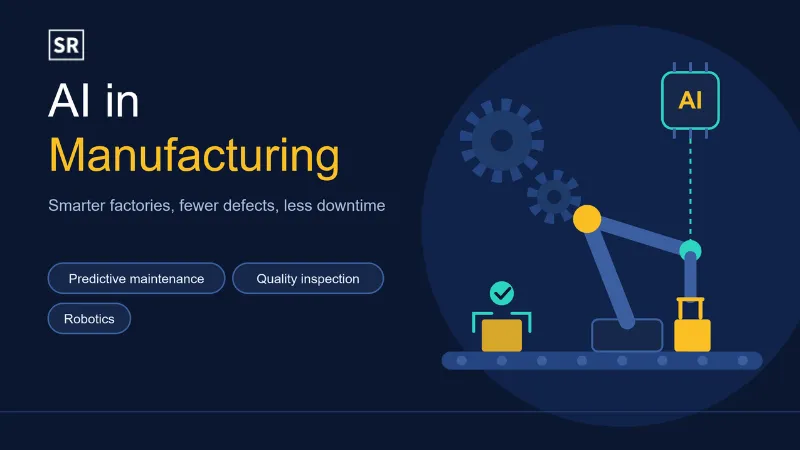
AI in Manufacturing: Use Cases, Benefits and Business Impact